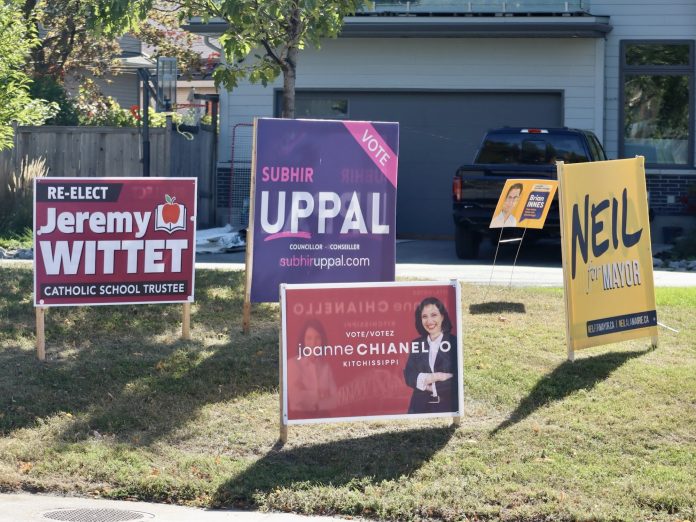

Colourful election signs are once again lining streets across Ottawa as candidates make their pitch to voters ahead of the Oct. 26 municipal election.
But in Kitchissippi, one thing is already certain: the ward will have a new councillor for the first time in more than a decade.
Three-term Kitchissippi Coun. Jeff Leiper, who has represented the ward since 2014, is giving up his council seat to run for mayor, leaving behind an open race to replace him.
Kitchissippi is one of the wards guaranteed to see a change at the council table. In Stittsville, Coun. Glen Gower is also leaving municipal politics. Meanwhile, two council races were decided before campaigning even began: Riley Brockington was acclaimed in River Ward and David Brown in Rideau-Jock after neither drew an opponent by the nomination deadline. They are the first Ottawa councillors to win by acclamation since 2003.
Four candidates are vying to succeed Leiper in Ward 15: former municipal affairs journalist Joanne Chianello, former Hintonburg Community Association president Brian Innes, entrepreneur Subhir Uppal and Xavier Commerford. Michelle Groulx was in the race but withdrew her nomination.
As of late 2025, Kitchissippi Ward was home to about 48,700 residents and 24,780 households. During the 2022 municipal election, voter turnout reached 52.98 per cent, with 15,693 ballots cast.
This election, candidates are campaigning on issues shaping life in Kitchissippi, including development, transit, aging infrastructure, and paid parking. The Kitchissippi Times asked each candidate how they would tackle these issues and what they would prioritize if elected.
The Kitchissippi Times was unable to reach Commerford before the deadline.
Paid parking
Few municipal decisions have generated as much debate in Kitchissippi over the past year as the introduction of paid parking along portions of Richmond Road and Wellington Street West.
The changes took effect in September 2025 following years of study into parking pressures in Westboro and Wellington West. The City said data collected during its Kitchissippi Parking Study showed consistently high demand, particularly during daytime hours and on weekends. Paid parking was introduced to increase turnover and make it easier for drivers to find spaces in busy commercial areas.
But the rollout has remained contentious among some residents and businesses, with concerns ranging from inconsistent hours and confusing signage to the impact on neighbouring residential streets.
Joanne Chianello said she does not expect paid parking to disappear altogether, but would work to make the system more consistent. Among her concerns are differing paid parking hours along portions of the same commercial corridor.
She said she would push for uniform hours and clearer information in the City’s parking applications. Chianello is also proposing 15 minutes of free parking for people making quick stops at businesses.
“For places like the Bagelshop, you want to run in to pick up a dozen bagels, or restaurants that really count on takeout,” she said. “It’s just a little bit of goodwill to the residents, so you don’t feel like the city’s nickel-and-diming you every three seconds.”
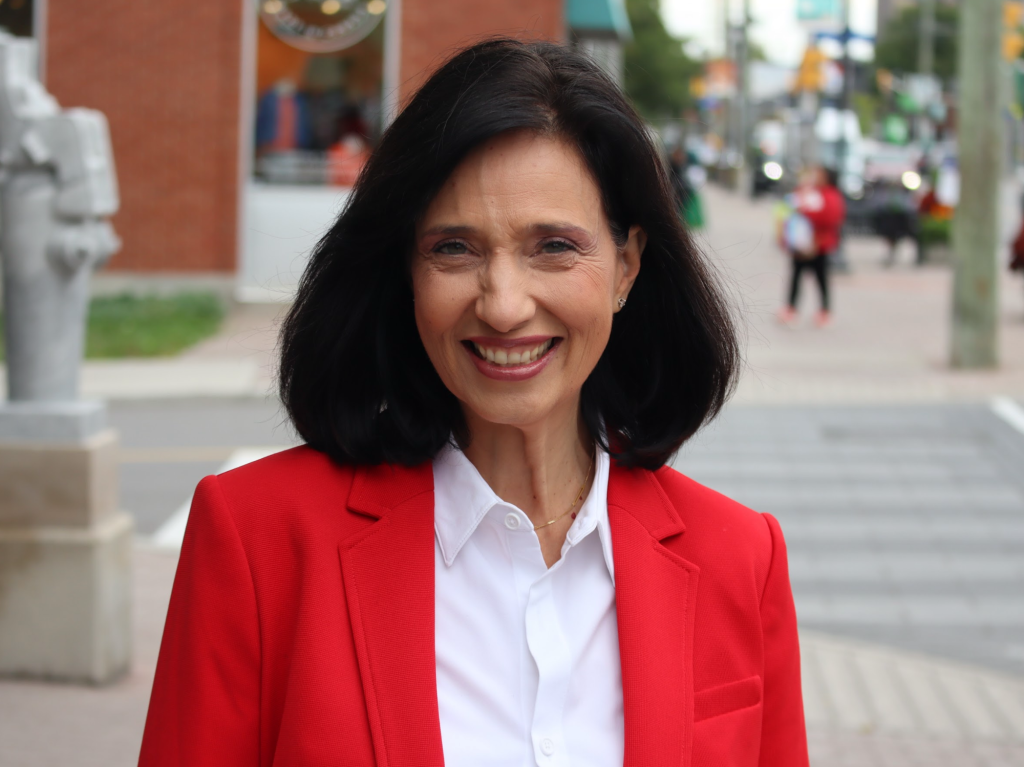
Chianello said she has checked with City staff and believes a free 15-minute period would be technically possible.
Brian Innes is calling for a review of the program now that it has been operating for roughly a year.
“What I hear often from residents is frustration about people blocking their driveways, about lack of clarity on the system and how to use it,” he said. “And yes, people would prefer to park for free.”
Subhir Uppal has taken the strongest position against implementing paid parking.
“I don’t support paid parking the way it was executed,” Uppal said. “I think it wasn’t done with the proper consultation, considering the businesses, the employees and the residents that were impacted by it.”
Asked directly whether he would eliminate paid parking, Uppal initially said the current system should be stopped while alternatives are considered.
“In the short term, yes, I think we need to stop paid parking and look at other ways we can generate more efficiencies for the city so we get a better deal here for our community,” he said.
Pressed on whether paid parking could eventually return, Uppal left the door open.
“Possibly,” he said, adding the issue could be reconsidered once the western LRT extension is operating. “Long term, we will see.”
Transit
OC Transpo has continued to grapple with bus reliability and ridership, which have yet to return to pre-pandemic levels fully. Its redesigned New Ways to Bus network also changed routes across Ottawa, with the City acknowledging that some riders now have farther walks or additional transfers.
The cost of riding has also increased. The adult single-ride fare rose to $4.10 in January 2026, while a regular adult monthly pass increased to $138.50.
For Chianello, frequency is as important as whether a bus arrives when scheduled. She said she has heard from residents who want to use transit but cannot trust connections enough to build their daily schedules around it.
One woman, Chianello said, told her she eventually purchased a car because an unreliable connection home left her late picking up her daughter. She also believes the New Ways to Bus network needs another look as travel patterns and the transit system change.
“The city doesn’t work if transit doesn’t work,” she said. “We have a big intensification plan; we need transit. Environmental issues, we need transit. Everything needs transit.”

Innes said his priority would similarly be reliability — particularly addressing “ghost buses” that appear on schedules but never arrive.
“I take transit. I’ve experienced the challenge and hear from residents that ghost buses really make transit unreliable because you’re not sure if the bus is going to show up to get you to your appointment, to school or to work,” he said.
Innes proposed publicly posting weekly information about cancelled or missing trips on his councillor website.
Uppal divided the problem into two categories: reliability and affordability.
On reliability, he called for greater use of real-time ridership information to determine where buses are most needed.
“There are technological tools of AI that can recognize where buses should be placed, where there’s more demand for buses,” he said. “And we can generate real-time data for this.”
Uppal specifically pointed to routes 11 and 81 as services he believes could benefit from additional capacity, provided that ridership data supports it.
His larger proposal is a move toward distance-based fares rather than charging the same basic fare regardless of trip length.
“You pay for how much transit you use,” Uppal said. “I think that would be very beneficial here for our community. It would increase ridership. It would increase faith and trust in our system.”
Infrastructure and recreation
A 2025 City asset-management review found that Ottawa owns and manages more than $90 billion in infrastructure. While the City concluded there was no imminent threat to day-to-day service delivery, its recreation portfolio shows where longer-term pressures are developing.
About 14 per cent of arena and ice-rink assets were rated in poor or very poor condition, while another 45 per cent were considered fair. The pressures are even greater for aquatic facilities, 35 per cent of which were rated poor or very poor.
In Kitchissippi, much of the candidates’ attention has centred on Tom Brown Arena.
The Bayview Road facility remains open and in use, and the City’s 2026 capital budget includes lifecycle work at the arena. But its location near Bayview Station and the rapidly developing LeBreton Flats area has also prompted questions about what the site should look like decades from now.
Chianello said it’s “ridiculous” that there is only one arena to service an entire ward and only one pool. In the short term, she wants to explore smaller additions, including a refrigerated outdoor rink and expanded programming at existing facilities.
Her longer-term vision would examine Bayview, Tom Brown Arena and surrounding lands together to determine whether a larger recreation complex could eventually be constructed, potentially including multiple recreational uses.
Chianello also pointed to the redevelopment of Tunney’s Pasture as another opportunity to negotiate for public recreation space. The 49-hectare federal site is planned as a mixed-use community with housing, employment, public spaces, and community amenities.
Innes similarly argued that the ward needs a long-term recreation plan for buildings like Tom Brown. He said the city should not wait until aging facilities are no longer usable before determining their replacements.
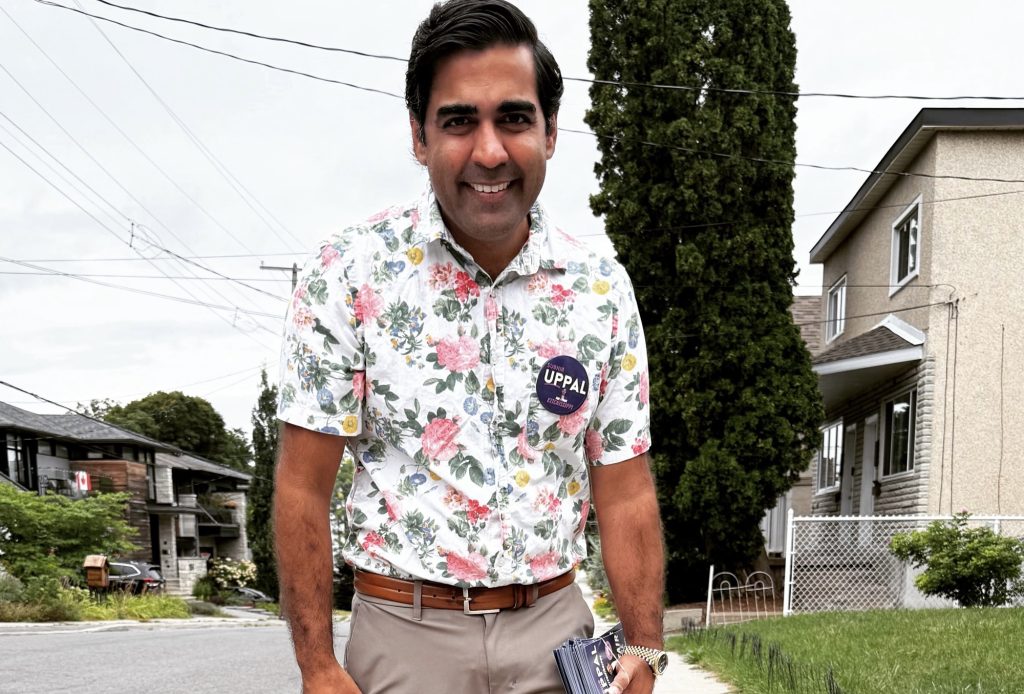
Uppal is also calling for a major new recreation facility, pointing to Tunney’s Pasture and Bayview as possible locations. He said registering for swimming lessons is currently “like the Hunger Games.”
The entrepreneur wants the City to negotiate for usable community space in major developments, particularly when developers seek changes to existing planning rules.
Intensification and greenspace
High-rise proposals have transformed portions of Scott Street, Richmond Road, Wellington Street West and the areas around rapid transit stations. At the same time, provincial housing policies and Ottawa’s Official Plan have directed substantially more growth into existing urban neighbourhoods.
The debate was illustrated recently by the redevelopment of the Carleton Tavern block in Hintonburg.
Council approved the Official Plan and zoning amendments in September for a 32-storey tower with 386 residential units, commercial space, a public plaza, and a reconstructed Carleton Tavern building. The proposal had been reduced from an earlier 38-storey, 465-unit plan, but residents continued to raise concerns about height, traffic and parking.
Development is also colliding with another challenge: Kitchissippi’s relatively limited tree canopy.
Ottawa’s Official Plan calls for the City to pursue an urban forest canopy of 40 per cent and directs growth and intensification to maintain the urban forest and provide space for trees.
Kitchissippi sat at about 25 per cent canopy coverage in the most recently reported ward-level figures, down from 27 per cent in 2017.
Chianello said one of her frustrations with the planning system is how difficult its rules are for ordinary residents to understand.
She said a councillor’s job should include determining exactly what planning rules allow on a site and explaining that to residents in plain language before a development moves too far through the process.
“I sweat details,” Chianello said. “And so the first thing I would always do is look at any proposal to say, what is really allowed here? What does it actually say? And how do I explain that in plain language?”
But Chianello said accommodating more residents cannot simply mean approving housing. Transit, recreation, roads, sewers, parks and trees all need to keep pace.
“I think people would feel a little bit better about intensification if they could see there’s a plan to make it work for all of us,” she said. “Intensification isn’t free. It needs investment.”
She wants a ward-wide tree-planting strategy and greater investment in the public realm, including more trees, benches and gathering spaces along main streets.
Innes has emphasized the councillor’s role in representing residents when controversial developments come before city hall. He rejected the idea that councillors should simply tell residents that Queen’s Park or developers dictate decisions.
“We need, as councillors, to consider the interests of the city, but our first and most important role is to represent the interests of the people who voted and live in Kitchissippi,” Innes said.
Uppal said the City should also take a harder look at the cumulative effects of development, including parking, traffic, unit sizes, trees and access to community amenities.
Rather than spending municipal resources fighting every development at the Ontario Land Tribunal, Uppal said there may be cases where the City could negotiate for tangible neighbourhood benefits.
“Is there something you can contribute to the community, like public space, community space, more park space instead, that we can say, look, it could be kind of a win-win scenario for both sides?” he said.
“Yeah, we might have the higher tower go in, but they were going to get it anyway. But look, in exchange, we got community space, more investment in parks from this builder.”