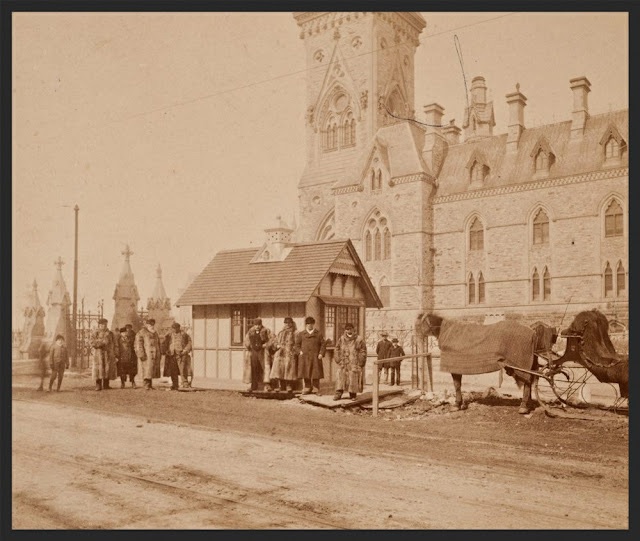

Ottawa residents are no strangers to the history of Canada’s capital. Stories of the Parliament Buildings and the Rideau Canal are taught in schools. In the ByWard Market, plaques and displays describe how Bytown was once a very different landscape from the one it is today.
Long before Ottawa became the city it is now, it was Bytown: a rough and rapidly growing settlement built around the construction of the Rideau Canal in the 1820s.
Colonel John By established the military canal project following the War of 1812 as a secure inland supply route between Montreal and Kingston. What emerged around the canal works was a chaotic frontier town filled with Irish and French Canadian labourers, lumber barons, taverns, mills, and muddy streets.
By the mid-19th century, the timber trade had transformed the community into one of the busiest lumber towns in North America. Massive log booms crowded the Ottawa River, railways cut through growing neighbourhoods, and industrial districts like LeBreton Flats and Mechanicsville became home to thousands of working-class residents.
In 1857, Queen Victoria selected Ottawa as the capital of the Province of Canada, partly because of its location between English and French Canada and its defensible distance from the American border.
Over the decades that followed, Ottawa evolved from a rough industrial town into a planned government city. Entire communities disappeared in the process—highways carved through neighbourhoods. Rail lines vanished. Fires levelled blocks of homes. Forgotten tragedies shook the city. And in between it all came moments of spectacle — royal tours, papal visits, movie theatres under the stars, and local teenagers who grew up to become international stars.
Some of these stories remain well known — others have faded almost entirely from public memory. Thanks to the work of historians such as the Kitchissippi Times’ Dave Allston, Andrew King, Heritage Ottawa and others, many of these lesser-known chapters have been uncovered and preserved.
These are just some of the stories that helped shape urban Ottawa over the last two centuries.
The mystery beneath Pooley’s Bridge
Beside the Fleet Street Pumping Station and the stone arches of Pooley’s Bridge lies one of Ottawa’s most persistent historical mysteries: the legend of Pooley’s Cave.
Though no confirmed entrance exists today, stories of a cavern beneath LeBreton Flats have circulated for more than a century. The cave is tied to Pooley’s Bridge, one of Ottawa’s oldest surviving bridges.
The original crossing was constructed in the 1830s by Lieutenant Henry Pooley under the direction of Colonel John By during the building of the Rideau Canal. The current stone bridge, built in 1873, still stands near the Ottawa River aqueduct system and is designated a heritage structure.
Accounts of the cave appeared in newspaper stories and local recollections dating back to the late 19th century.
Explorers reportedly entered through openings near the bridge and described underground chambers stretching beneath what is now downtown Ottawa. Some stories claimed the cavern extended east toward Christ Church Cathedral beneath Sparks Street. Others described stalactites, underground streams, waterfalls, and narrow rock passages that required crawling.
According to an old Ottawa Citizen clipping, Mrs. James Arkley recalled “she and other girls used to go in the sixties to a distance of 150 feet. They didn’t go further as they got scared each time when they heard the roar of the water.”
Historian Andrew King wrote on his blog Ottawa Rewind that the cave might have existed up until 1991, when the National Capital Commission began to terraform the bridge’s area.
His investigation also led to the belief that spring water from the area may once have supplied early breweries and later the Pure Spring soft drink company, which was once one of Ottawa’s best-known beverage producers.
Building the Queensway
In the years following the Second World War, Ottawa was changing rapidly. Suburbs were expanding, car ownership was rising, and traffic through the city’s downtown streets had become increasingly congested.
To address those growing pressures, planners proposed a modern east-west expressway that would eventually become known as the Queensway.
The idea originated in the Gréber Plan, a sweeping redevelopment blueprint commissioned by Prime Minister William Lyon Mackenzie King and prepared by French planner Jacques Gréber in the late 1940s. The plan called for major changes to Ottawa’s transportation system, including the removal of rail lines from the downtown core and the creation of a controlled-access freeway across the city.
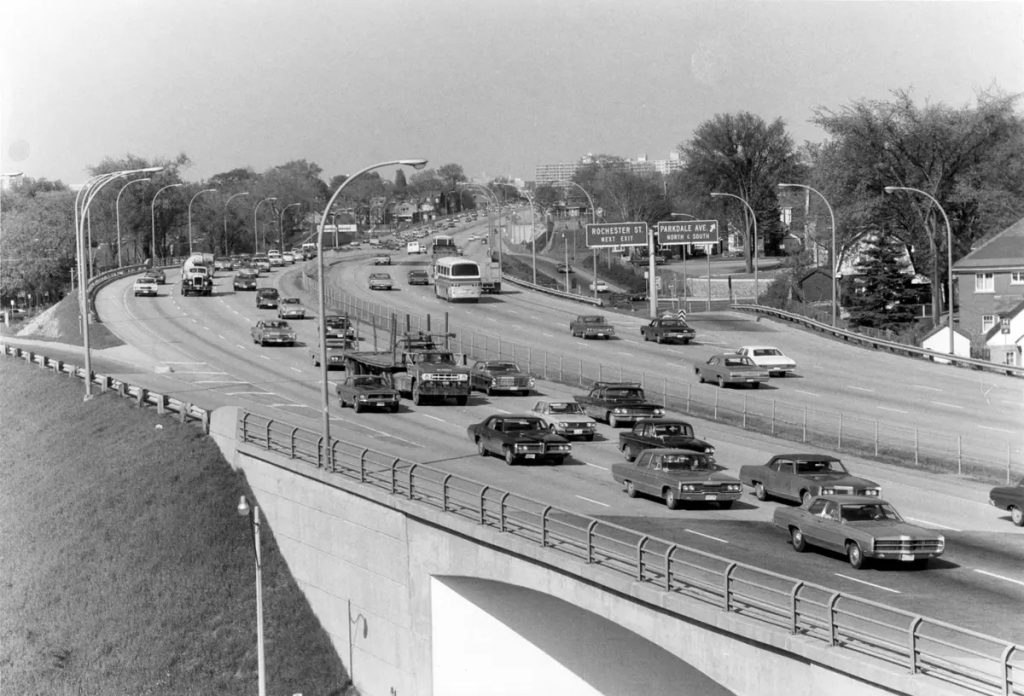
Construction officially began in 1957 during a visit by Queen Elizabeth II. Standing near Hurdman Bridge, the Queen detonated explosives to symbolically launch the project, giving the future roadway its royal-inspired name.
The highway was built in four stages over nearly a decade. The first section, stretching east from the Rideau River toward Montreal Road, opened in 1960, followed by additional western and central sections requiring major bridge and overpass construction over the Rideau Canal and Rideau River.
By October 1966, the final gap near Hurdman Bridge had been completed, officially linking the route across Ottawa. The project transformed transportation in the capital and became part of Highway 417, a key corridor connecting Ottawa to Montreal and beyond.
How the parkway reshaped Ottawa’s waterfront
For much of Ottawa’s early history, the shoreline along the Ottawa River looked very different from the landscaped corridor which now includes the Kichi Zībī Mīkan Parkway.
Before the parkway was built, the waterfront west of downtown was lined with rail tracks, lumber yards, cottages, beaches, small businesses and industrial operations tied to Ottawa’s booming timber economy.
Throughout the late 1800s and early 1900s, rail lines hugged the riverfront through communities such as Mechanicsville, Champlain Park, Westboro and Britannia. Trains transported lumber, coal and other goods through the growing city, while industries used the shoreline for storage and shipping.
At the same time, parts of the waterfront also became recreational destinations. Britannia Beach in particular emerged as one of Ottawa’s most popular summer gathering spots, drawing crowds for swimming, boating and picnics.
By the mid-20th century, however, federal planners viewed the industrial riverfront as incompatible with the image of a modern national capital.
Following the Second World War, Prime Minister William Lyon Mackenzie King commissioned French planner Jacques Gréber to redesign Ottawa through what became known as the Gréber Plan. Among its recommendations was the removal of rail infrastructure and heavy industry from central areas of the city, including along the Ottawa River.
The plan envisioned a scenic parkway stretching along the waterfront, combining transportation infrastructure with green space and public access to the river.
Construction of what became the Ottawa River Parkway — later renamed the Sir John A. Macdonald Parkway and now Kichi Zībī Mīkan — began in stages during the 1950s and 1960s.
Building the roadway required major landscape changes. Rail corridors were removed or relocated, industrial sites disappeared, and sections of the shoreline were reshaped into parks and open green space. Some homes and buildings near the river were also expropriated to make room for the project. The new roadway connected downtown Ottawa with west-end communities and eventually became one of the capital’s signature scenic drives.
Related: How garbage helped build the parkway and saved Mechanicsville
When fire ravaged Ottawa
In the 19th and early 20th centuries, fire was one of the greatest dangers facing Ottawa.
Before modern firefighting equipment and building codes, wooden homes, lumber piles, and dry forests made devastating blazes a constant threat across the growing capital.
Among the most destructive was the Great Hull-Ottawa Fire of 1900, still considered one of the worst disasters in the region’s history. The fire began in Hull after sparks from a defective chimney ignited a rooftop. Strong winds quickly spread the flames through tightly packed wooden buildings and nearby lumber yards along the Ottawa River.
Within hours, the inferno crossed into Ottawa’s west end. Entire neighbourhoods, including LeBreton Flats and areas between Booth Street and Dow’s Lake, were consumed. Roughly one-fifth of Ottawa and two-thirds of Hull were destroyed, leaving about 15,000 people homeless.
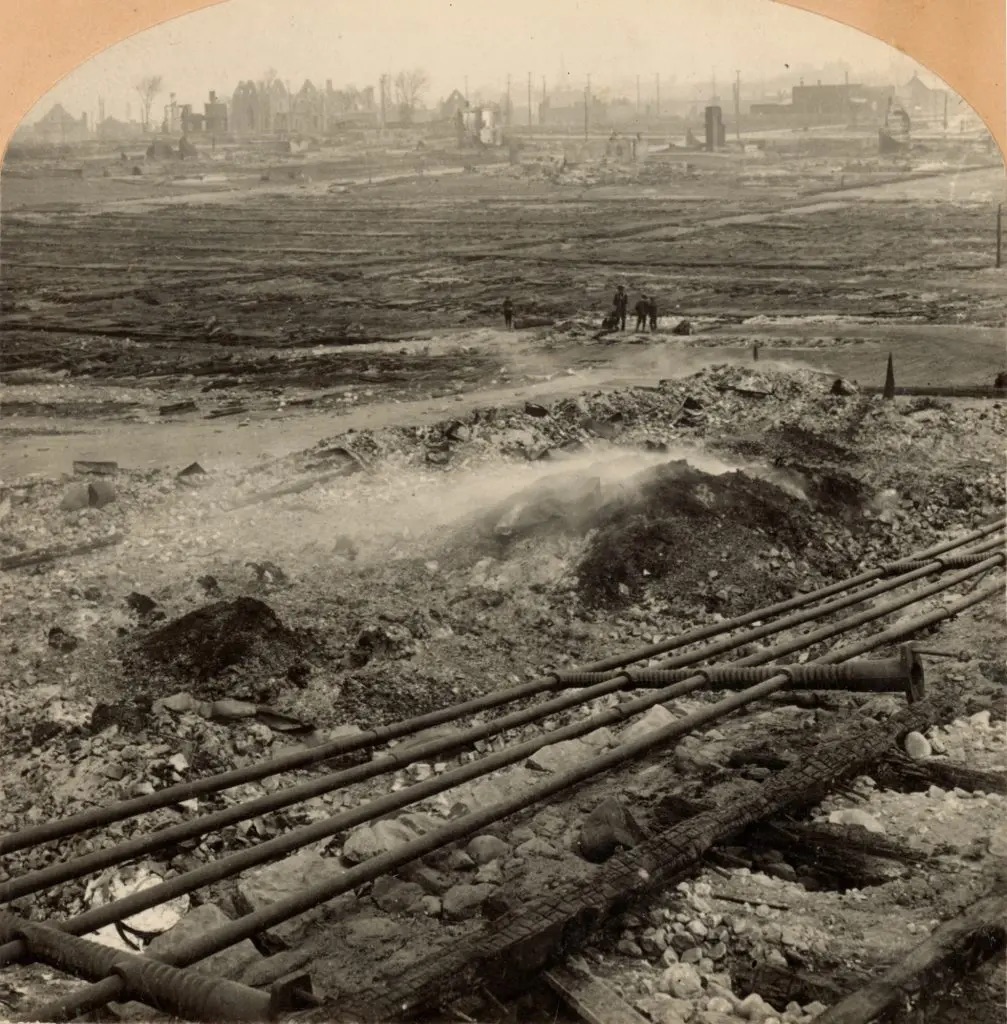
Huge stacks of drying timber along the riverfront acted as fuel for the fast-moving blaze. The fire dramatically altered west-end neighbourhoods such as Hintonburg, where many displaced residents later relocated.
Another major blaze struck a few years later in 1903 when flames tore through the Preston Street area after a fire broke out among J.R. Booth’s lumber piles near the Canadian Atlantic Railway corridor — today’s Trillium Line route.
Related: When the Great fire of 1903 ravaged through Preston
The fire spread quickly. Residents in the area loaded up rigs, wagons and sleds with their belongings and furniture, desperate not to lose everything again. But for many, it was too late, and items had to be abandoned. Even Plouffe Park, where many gathered, could not be saved.
It took six hours to get the fire under control, which burned until midnight. Over 240 homes were destroyed, and about 1,000 people were left homeless. Hintonburg was saved thanks to the winds blowing east and the fire brigade’s response.
The night Parliament burned
On the bitterly cold evening of Feb. 3, 1916, flames began rising from Canada’s Centre Block on Parliament Hill. Inside, politicians were debating how to improve the transportation of fish.
“I have been very sorry to notice during the years I have had the privilege of serving in this house that when our fishing industry is being discussed, very few members stay in the chamber,” said Bowman Brown Law, the 14-year Liberal MP from Yarmouth, Nova Scotia.
After addressing the house, Law left his seat and headed to the basement to make a long-distance call to a friend in Nova Scotia. It would be the last time he was seen alive.
The blaze broke out shortly before 9 p.m. in the House of Commons reading room. Parliament was in session at the time, and MPs, senators, journalists, staff, and visitors scrambled to escape as smoke filled the corridors.
Witnesses described members of Parliament smashing windows, crawling through smoke-filled hallways, and helping others evacuate through snow-covered exits.
Librarian Michael MacCormac and his staff famously managed to save the Parliamentary Library by closing massive iron fire doors just moments before the flames reached the historic room. The library remains the only major portion of the original Centre Block to survive the disaster.
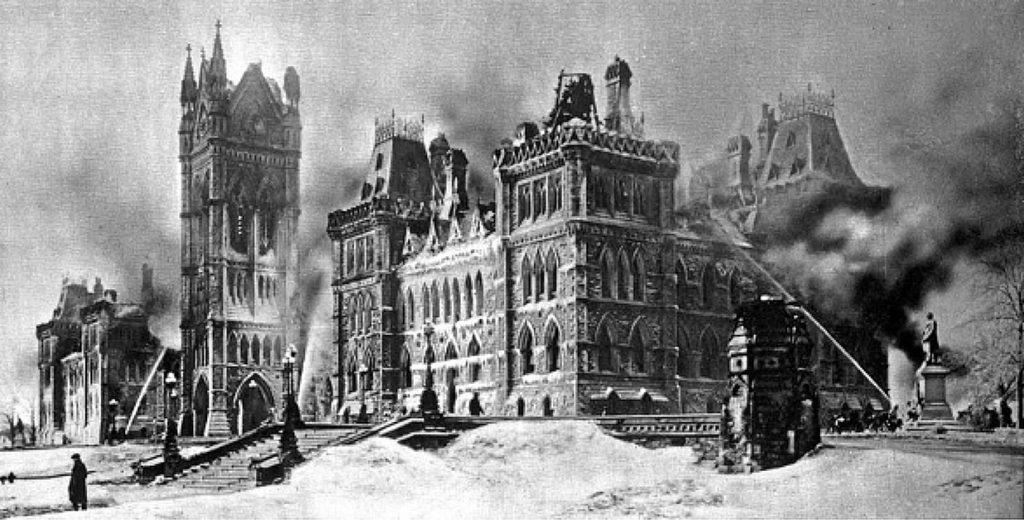
Firefighters battled freezing temperatures as water from hoses quickly froze and large sections of the building collapsed into flames. By the following morning, little remained of Centre Block except smoking stone walls and the Peace Tower’s predecessor, the Victoria Tower, which eventually collapsed during the fire.
Seven people died in the disaster, including Law. Others included René Laplante, an assistant clerk of the House of Commons, a police officer, and other government employees.
Despite speculation during the First World War that the fire may have been caused by German sabotage, investigators later concluded it was almost certainly accidental. A Royal Report commission identified a smouldering cigar or faulty electrical wiring as likely causes.
Ottawa’s first mosque
According to documented history, the first Muslim immigrants to settle in Ottawa were Hassan Mahmood Wanda and his family, who arrived in 1903. They lived in the ByWard Market and came from Kfarmishki — a small Lebanese-Syrian town near Beirut.
It took time for other Muslim families to settle here. In the early 1960s, when the entire population was around 480,000, fewer than 500 Muslims called Ottawa home. There were no mosques at the time. Instead, religious celebrations were held at the Pakistan High Commission and the Egyptian Embassy. When funerals and marriages were held, an Imam had to be brought in from Detroit.
But there were signs of growth, and in 1962, the Ottawa Muslim Association was created. The group began fundraising and asked its members to donate 10 days’ salary each year to the building fund.
In 1967, $25,000 was raised to purchase a lot next to Northwestern United Church, where weekly Muslim prayer services had been held for the last five years. City hall gave the go-ahead in 1973 for a mosque to be built, after a delay due to concerns about parking.
On March 26, 1975, while construction continued on the upper floors, a prayer service was held in the mosque’s basement. Less than a year later, in late February 1976, another service was disrupted during a visit by Pakistani Prime Minister Zulfikar Ali Bhutto.
A couple who had been separated from their children during the 1972 civil war that led to Bangladesh’s independence was permitted to present the prime minister with a petition. Moments later, shouting erupted inside the mosque, and Bhutto was quickly escorted away by security.
From Fisher Park to fame
Before he became an international music star known for Diana, Put Your Head on My Shoulder, and My Way, Paul Anka was a teenager growing up in Ottawa with big ambitions and a passion for music.
Anka was born in Ottawa on July 30, 1941, to Andrew and Camelia Anka, whose family roots traced back to Syria and Lebanon. His parents operated the Locanda restaurant on Laurier Avenue, a popular gathering spot in the city. The family lived near Fisher Park, where Anka attended school and first began experimenting with music.
Music became part of his life early. He sang in the choir at St. Elias Antiochian Orthodox Cathedral and studied piano and music theory while attending Fisher Park High School. By his early teens, he was already performing around Ottawa and Hull, appearing at amateur nights and local clubs.

At 14, Anka formed a vocal group, the Bobby Soxers, with fellow students. Around the same time, he began writing songs and looking for ways into the music industry.
In 1956, he convinced his parents to let him travel to Los Angeles, where he recorded his first single. A year later, he went to New York and played a collection of songs for ABC-Paramount producer Don Costa. Among them was Diana, inspired by an Ottawa teenager whom Anka admired from afar.
Released in 1957, Diana became an international hit, turning the 15-year-old Ottawa singer into a global star.
When the pope came to LeBreton Flats
When Pope John Paul II arrived in Ottawa in September 1984, the capital became the centre of one of the largest public gatherings in its history. Crowds lined streets, parks, and the banks of the Rideau Canal as the pontiff made his first visit to Canada.
The pope arrived in Ottawa on Sept. 19, greeted at Uplands Airport by Prime Minister Brian Mulroney, Governor General Jeanne Sauvé and senior Catholic leaders. Security was exceptionally tight following the 1981 assassination attempt that nearly killed him in St. Peter’s Square.

One of the most memorable moments came when Pope John Paul II boarded a specially designed papal barge at Dow’s Lake for a ceremonial trip along the Rideau Canal. Protected by bullet-resistant glass, the vessel travelled north through the city as massive crowds gathered along pathways, bridges and shorelines.
The visit also included a major outdoor mass at LeBreton Flats, where tens of thousands gathered in a sprawling open field west of downtown. At the time, LeBreton remained largely vacant following the federal government’s expropriations and demolitions in the 1960s.
Related: Preston Streets history preserved though Italian Canadian Historical Centre
The Christmas Massacre
Just days before Christmas in 1963, Ottawa was shaken by a violent crime that became known in newspaper headlines as the “Christmas Massacre.”
The tragedy unfolded on Dec. 22 at the St. Jean Baptiste rectory on Empress Avenue. Two brothers, Roger and Réginald Binette, entered the building armed with stolen revolvers. What began as a planned robbery and kidnapping quickly spiralled into violence.
Inside were clergy members, parish workers and visitors preparing for Christmas celebrations. Gunfire followed after the brothers were discovered. Four people were killed: Father Louis Chevrier, parish caretaker Paul Mercier, housekeeper Alberte Guindon and visitor Henédine Béchard. Several others were wounded.
The standoff ended when police surrounded the rectory. Roger Binette died during the confrontation, while 17-year-old Réginald surrendered and was taken into custody.
Investigators initially believed the brothers intended to steal the church collection money. Later psychiatric examinations revealed a more elaborate plot involving the kidnapping of Father Chevrier and demands for money from wealthy Ottawa businessmen.
Réginald Binette was later convicted of murder and sentenced to life in prison.
Ottawa’s deadly McKellar train disaster
There wasn’t a cloud in the sky on a warm summer afternoon in June 1913, as hundreds of hopeful immigrants passed through Ottawa on their journey toward a new life in Western Canada. Many had crossed the Atlantic from Scotland and Ireland only days earlier, carrying little more than luggage, family photographs, and dreams of farmland and opportunity on the Prairies.
But just minutes after departing Ottawa, tragedy struck.
At around 1:30 p.m. on June 25, a Canadian Pacific Railway train bound for Winnipeg left Ottawa’s Central Station — located across from the newly opened Château Laurier — and headed west. The train carried a mix of passengers in colonist, tourist, and first-class cars. Most of the immigrants travelled in inexpensive “colonist” coaches, outfitted with hard wooden benches and few comforts, designed to move thousands of newcomers westward as Canada experienced a massive immigration boom.
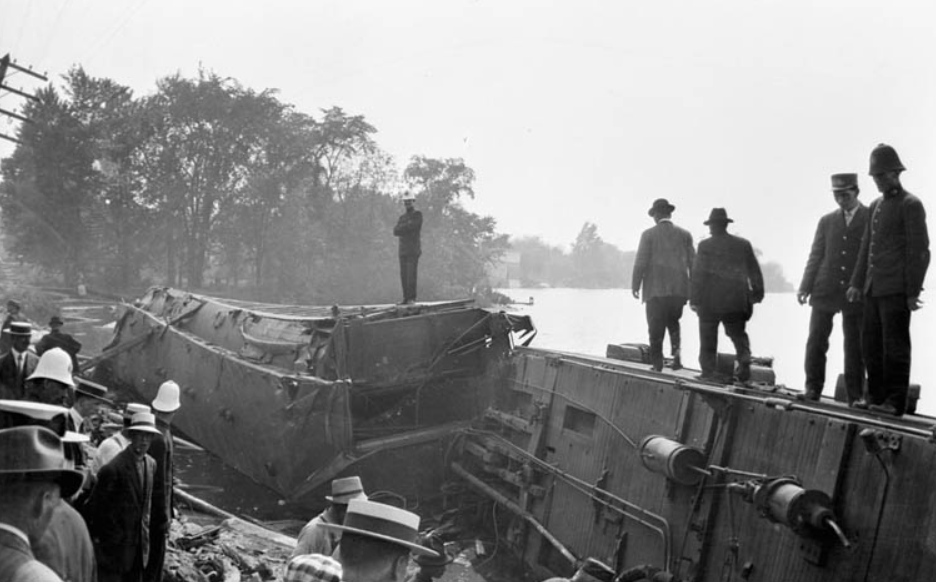
After crossing into Hull and returning to Ontario over the Prince of Wales Bridge, the train followed the Ottawa River through what was then cottage country near Britannia. Witnesses recalled passengers waving from windows as the train passed streetcars heading toward the popular lakeside amusement park.
Then, near the growing McKellar Townsite, the train suddenly lurched.
With a violent grinding noise, several cars left the tracks. Two crowded commuter cars plunged down an embankment and landed partly submerged in the Ottawa River, while additional passenger cars jackknifed beside the tracks. Passengers were thrown from their seats as luggage, dishes, and debris flew through the air.
Eight people were killed, and roughly 65 others were injured.
Most of the victims were newly arrived immigrants from Ireland and Scotland. Some died from injuries sustained in the crash, while others drowned in the shallow river water after becoming trapped or unconscious inside the wreckage.
Residents living nearby rushed to help pull survivors through shattered windows. Streetcar passengers and passersby also joined rescue efforts before ambulances and doctors arrived from Ottawa. Newspaper reports at the time noted that automobiles helped emergency crews reach the scene faster than ever before.
Investigators examined several possible causes for the crash, including track defects and the possibility of a “sun kink,” where rails warp in extreme heat. Ultimately, however, a coroner’s jury concluded the exact cause of the derailment could not be determined.
The forgotten DND terrorist attack bombing
All was quiet on the streets of downtown Ottawa when the city was shaken by an explosion that shattered windows, filled the air with flying glass, and claimed the life of a federal employee.
At 6:26 a.m. on June 24, a bomb exploded outside a temporary Department of National Defence building at Cartier Square, near Lisgar Street. The explosive device had been lowered into a basement window well before detonating, ripping apart the southeast corner of the structure and destroying a communications room inside.
Killed in the blast was Jeanne d’Arc St. Germain, a civilian DND supervisor from Vanier who had worked for the department for 15 years. Two military personnel were also injured, while another employee suffered severe shock. Witnesses described scenes of chaos as emergency crews rushed into the smoke-filled building moments after the explosion.
The force of the blast could be felt blocks away. Windows shattered at nearby buildings, including Lisgar Collegiate Institute across the street, while fragments of glass rained down onto empty sidewalks below. Investigators later determined the bomb likely consisted of roughly a dozen sticks of dynamite hidden inside a duffel bag and triggered by a timing device.
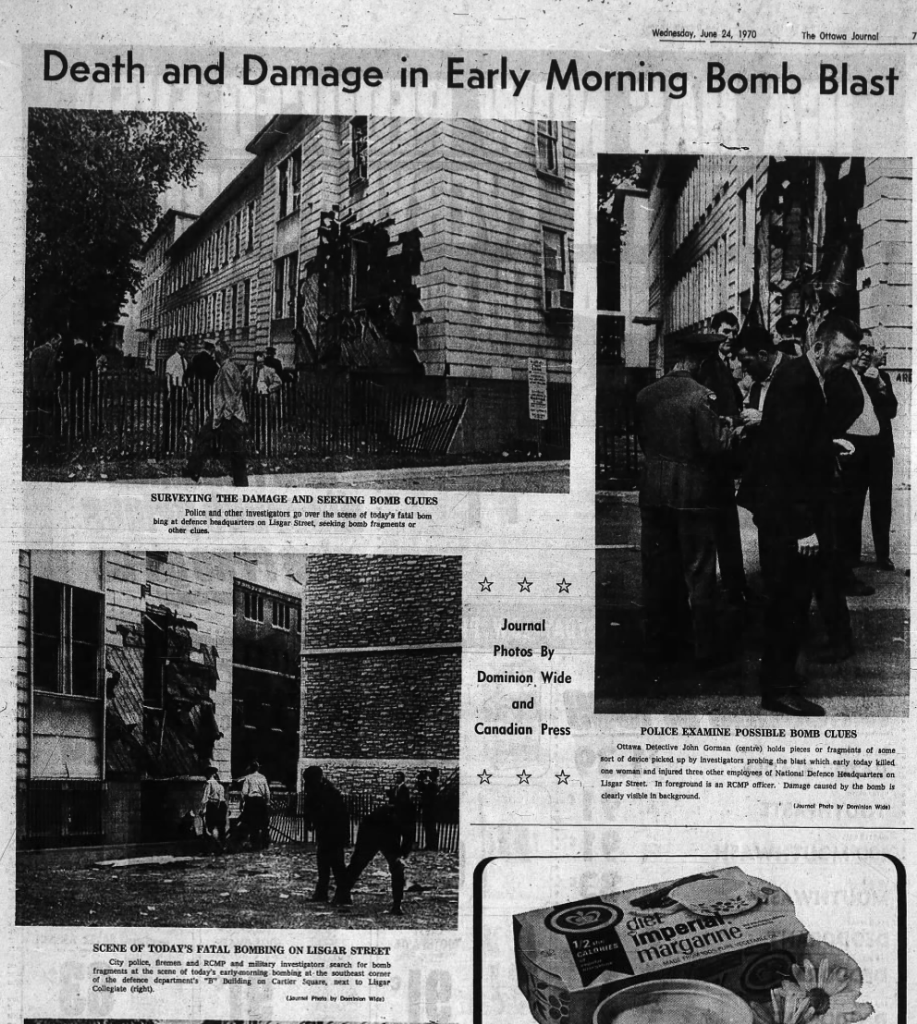
Only minutes before the explosion, Ottawa radio station CKOY had received an anonymous warning call saying a bomb had been planted at the DND building. There was not enough time to evacuate the structure.
Suspicion quickly turned toward the Front de libération du Québec, better known as the FLQ, a radical separatist group responsible for hundreds of bombings during the 1960s and early 1970s. The attack occurred on St-Jean-Baptiste Day, a date deeply tied to Quebec nationalism, further raising concerns that the bombing was politically motivated. Days later, the FLQ officially claimed responsibility.
The Ottawa bombing came only months before the October Crisis, when the FLQ kidnapped British diplomat James Cross and Quebec cabinet minister Pierre Laporte, who was later murdered. Those events prompted Prime Minister Pierre Trudeau to invoke the War Measures Act.
Police conducted searches in both Ottawa and western Quebec following the bombing, but no one was ever charged. A coroner’s jury later ruled the attack was an act of sabotage against a military installation carried out by unknown individuals.
Ottawa’s forgotten shanty town
Tunney’s Pasture today is known for its government offices, transit stations and federal workers. But during the Great Depression and into the postwar years, part of the site was home to one of Ottawa’s poorest and least remembered communities: a sprawling shanty town along the Ottawa River.
Beginning in the early 1930s, families struggling through unemployment, poverty and a growing housing crisis began settling on undeveloped land at the north end of Tunney’s Pasture. At the time, the area looked very different from how it does today. Instead of office complexes and parkways, the riverfront was made up of muddy fields, brush, rocky shoreline and scattered trees.
Many residents came from nearby neighbourhoods such as Mechanicsville and Hintonburg, where working-class families were already facing difficult economic conditions during the Depression. With few social supports available, some people who lost jobs or could no longer afford rent had little choice but to build makeshift shelters from scrap wood, cardboard, tar paper and other salvaged materials.
What began as a temporary solution gradually evolved into a long-term settlement. The shanty village remained for nearly 25 years, from the early 1930s into the 1950s. Some families lived there year-round, even during Ottawa’s harsh winters. Historical accounts describe tiny one- and two-room structures with dirt floors, no running water, electricity or sewage services.
Conditions in the settlement were extremely poor. Residents scavenged nearby neighbourhoods looking for materials to improve their homes, while charitable organizations and social workers occasionally visited the area to provide aid. Children living in the shantytown often dealt with hunger, illness and overcrowding.
Despite its size, the community was rarely discussed publicly and has largely faded from Ottawa’s historical memory. Few photographs survive, and much of the settlement disappeared as the federal government redeveloped Tunney’s Pasture during the postwar period. New office buildings gradually replaced the makeshift homes, erasing much of the visible evidence that the community had ever existed.