
By Blaine Marchand
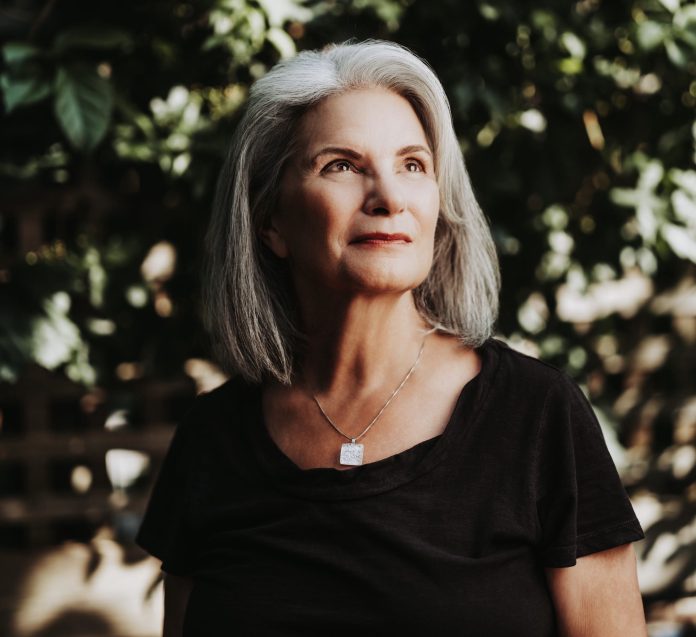
There is a popular saying that every family has a story. And for this we should be thankful that Ottawa writer (and a former long-term resident of Kitchissippi), Barbara Sibbald, skillfully recaptures for us her maternal family’s tale in AlmostEnglish, published this autumn by Calgary’s Bayeux Arts. Not surprising, given that she is an accomplished and award-winning journalist and author, it is a captivating and fascinating read.
The novel recounts the life of her great grandparents, Stephen and Lily Turner, who lived in what was then the North West Frontier of India during the Raj period of British colonialism, and is now a province of Pakistan. Stephen was one-quarter Indian, or “not 16 annas to a rupee,” as the derogatory British phrase described people of his heritage. Yet Stephen, who came from a prosperous shipping family, had gone “home” for schooling at Hurstpierpoint College in Britain. At 16, the family business failed, so he and his brothers had to return to India to live in Calcutta in diminished circumstances.
Given his education and upbringing, Stephen was a staunch believer in the British system. He was certain that his lessons abroad and his innate talents would allow him to escape the usual low-paying and junior civil servant jobs deemed by the Raj as appropriate to his mixed heritage.
Lily and her parents had come from Scotland. Her father, Warrant Officer George Grant, a skilled technical expert whose position brought social status, was opposed to the marriage between Stephen and his daughter. He feared their married life, given Stephen’s background, would be one of continual hardship and poverty. Reluctantly, he agreed that they could marry if they still wished to have a life together after a year’s separation. Stephen remained in Quetta, working on the railroad, while Lily moved with her parents to Jullunder. In the end, after that one year, Lily’s father had to consent to the union, admitting Lily had always been “a headstrong girl.”
Originally, the author had intended to write the book as a work of creative non-fiction. This genre uses literary techniques to create vibrant descriptions within a factual narrative structure. She found, however, that this approach failed to capture the range of emotions that the couple must have gone through during that historical period in the Indian subcontinent. The story failed to come alive. So, putting aside drafts and redrafts, she decided to turn it into a work of fiction.
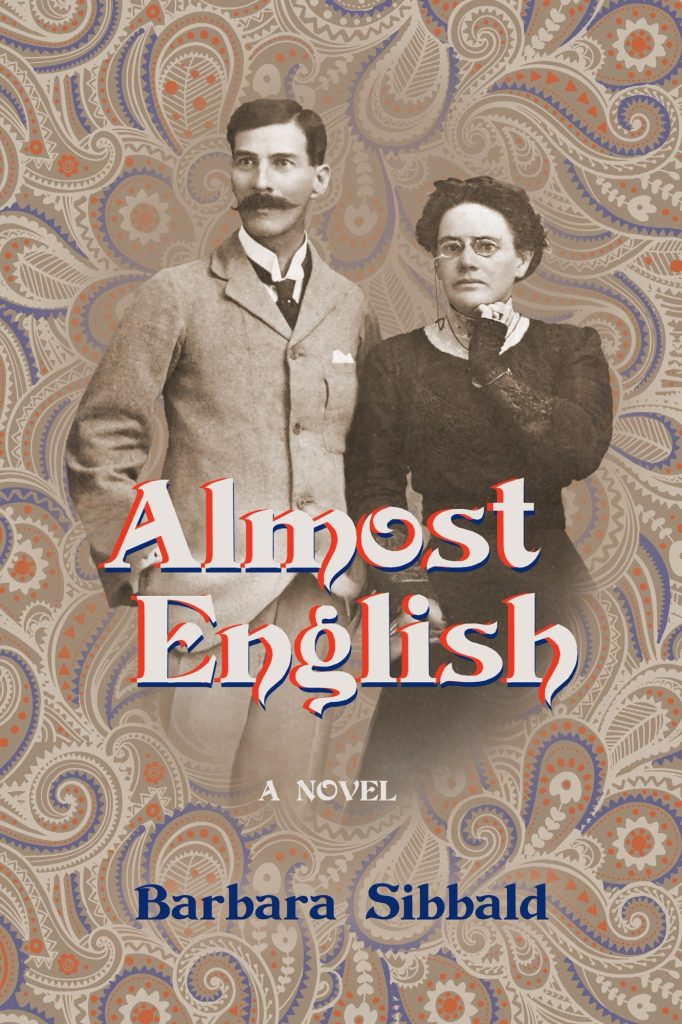
Thanks to her mother’s extensive genealogical research on her family and after visiting relatives in the United Kingdom and Canada, as well as taking two trips to India, Barbara gained access to a wealth of letters between Stephen and Lily, particularly a treasure trove of correspondence during the nine-months they were separated later in their marriage when he left the family home in Quetta to help demark the Durand Line separating British India and Afghanistan. There were also caches of photographs of the couple at different periods of time, of their seven children and the homes they lived in as Stephen slowly rose in the positions open to Eurasians. Different family members had treasured sketches and watercolours as well as some antique keepsakes.
In addition, Barbara turned to archives, including the British Library, and read historical periodicals, such as the Imperial Gazetteer of India and The Administration Reports of the Baluchistan Agency (1904/05 to 1911/12). In addition, she consulted Moore’s Family Medicine and Hygiene for India, a manual Lily herself used throughout her life. The list of non-fiction and fiction works the author read, cited in the book’s bibliography, is impressive.
Woven into the novel are brief chapters through which the author “breaks the fourth wall.” This is a narrative device, often used in theatre, by which a character speaks directly to the audience. It is a way to acknowledge or reinforce the central theme. In this case, these brief interstices allow Barbara to narrate and reveal her personal search for her own place in the world and how she identifies within her family and the community in which she moves.
All of this has enriched her novel. It is a remarkable book and a truly readable one. The nuanced depths the author gives to her characters brings them fully to life through their personalities, their strengths, and their weaknesses. It is a tale of two everyday people and the love that carried them through an era of great upheaval and political and social struggle. They are an attractive, likeable couple who, despite every obstacle they encountered, remained stalwart and positive. This quality reminds us that failures and achievements are a constant part of life, whether past or present.
The book captures a period when racism and privilege were rampant in an attempt by heads of states at all levels to keep people below them in their allotted place. Yet it still resonates deeply today as we witness societies where racism and political power manoeuvres threaten to overwhelm.
The book paints the geography of that region well. Baluchistan has a harsh geography and climate. Its people have always been proud, strong and fiercely independent. Still today, crisscrossing its terrain like ghostly reminders, are many of the railways the British constructed for strategic and economic purposes to build and expand the Empire.
In a similar way, this retracing of Stephen and Lily Turner brings to life the past story of the Raj in a unique way. Mingling truth and fiction, it is a reminder that despite all the adversities, family ties can retain the power to sustain, enrich and define who we are, even from beyond the grave.
Copies of Almost English are available at The Spaniel’s Tale bookstore, 1131 Wellington St. The book is $24.95
Blaine Marchand is a local poet and aid worker who has lived in Wellington West most of his life. He visited Afghanistan and Pakistan from 2001- 2008 and then was posted to Pakistan as a diplomat from 2008-2010, during which he travelled to Baluchistan several times.