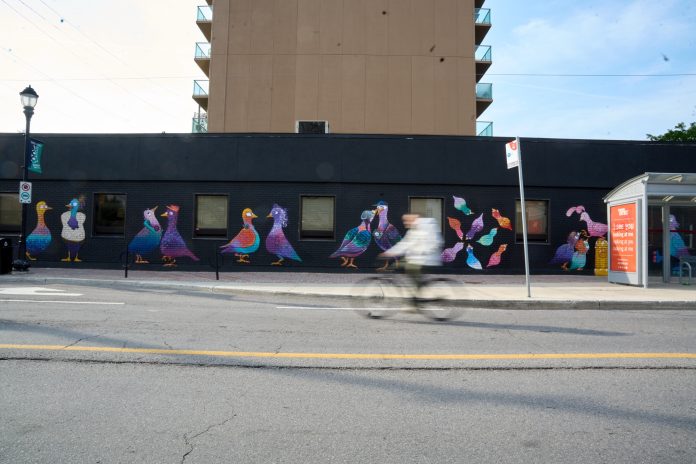

Every day, thousands of people walk or drive past the murals splashed across Ottawa’s buildings.
Rows of colourful pigeons stretch across a black wall in Wellington West. A vibrant peacock welcomes visitors outside the Wellington Mortgage Group building. Black-and-white illustrations cover the side of Urban Art Collective, each one inviting a closer look.
Most passersby barely give them a second glance. Fewer still know who painted them, when they appeared or the stories they were meant to tell. For Hintonburg resident Joseph Malovic, those unanswered questions became impossible to ignore.
While cycling through neighbourhoods across Ottawa, the computer scientist began stopping whenever he spotted a mural, photographing it and jotting down whatever clues he could find — an artist’s signature, a date tucked into the corner, or a title if one was available.
What started as a personal collection soon snowballed. After documenting roughly 50 murals, Malovic realized his growing catalogue needed a home. That became Ottawalls, an online, interactive registry dedicated to documenting Ottawa’s street art.
The database has since expanded to include more than 300 murals from neighbourhoods including Hintonburg, Chinatown, the ByWard Market and the Glebe. But despite the project’s rapid growth, many entries remain incomplete.
“Hundreds still have significant gaps,” said Malovic. “Maybe there’s no artist’s name, maybe there’s no year, maybe there’s no story behind the piece.”
He believes the people who can fill in those blanks are already living in the communities where the murals exist.
“I think there’s someone out there who might read the Kitchissippi Times and think, ‘Oh yeah, I remember when that wall went up in 2012, and I actually know the artist who painted that.’”
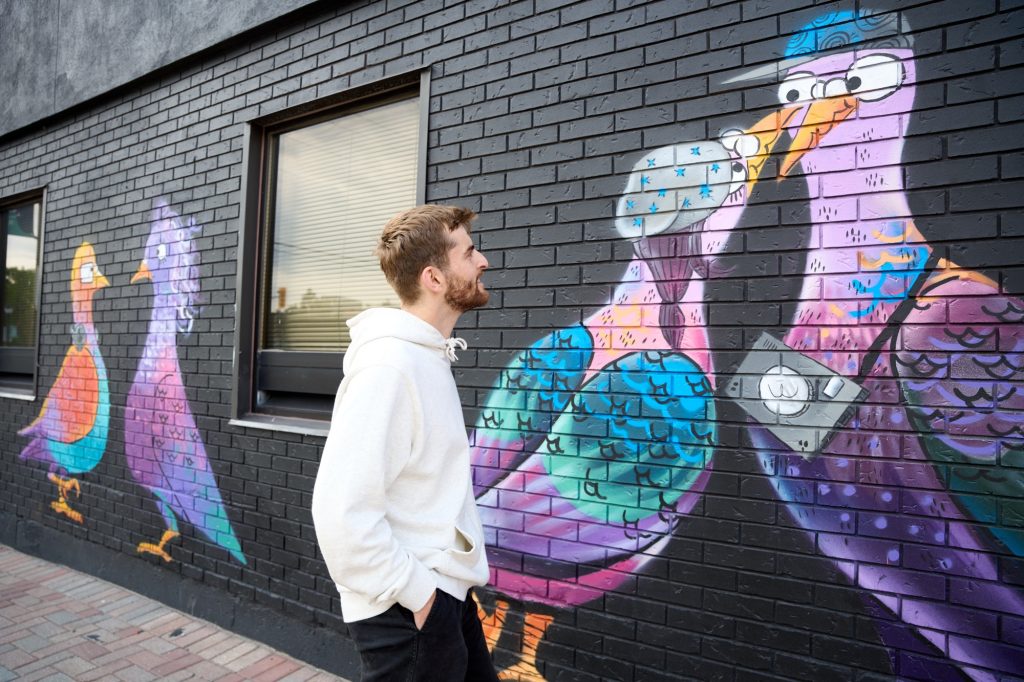
To make that possible, Ottawalls functions much like Wikipedia. Anyone can submit corrections or add information to a mural’s page, creating what Malovic hopes will become a community-built archive of Ottawa’s public art.
The idea took shape after he returned from a sabbatical spent travelling through Europe and the Middle East.
In cities such as Lyon, Paris and Amsterdam, he saw street art treated as an important part of local history and culture. Amsterdam even has a museum dedicated entirely to graffiti and street art.
Coming home, he was surprised by how difficult it was to learn even the basics about many of Ottawa’s murals.
“I just couldn’t find basic information about the murals that I was biking past,” he said. “It felt like maybe the city wasn’t celebrating street art very much.”
As someone who works in computer science and artificial intelligence, Malovic says preserving human-made art has taken on even greater significance.
“I think we’re living through a moment where AI is generating infinite generic images,” he said. “The murals on Ottawa’s walls are the direct opposite of that. They’re by real artists, they’re specific to the city, the streets and our community.”
“Documenting them is an act of resistance. It’s insisting that people who make art still matter. They deserve to be named, and their art should be celebrated.”
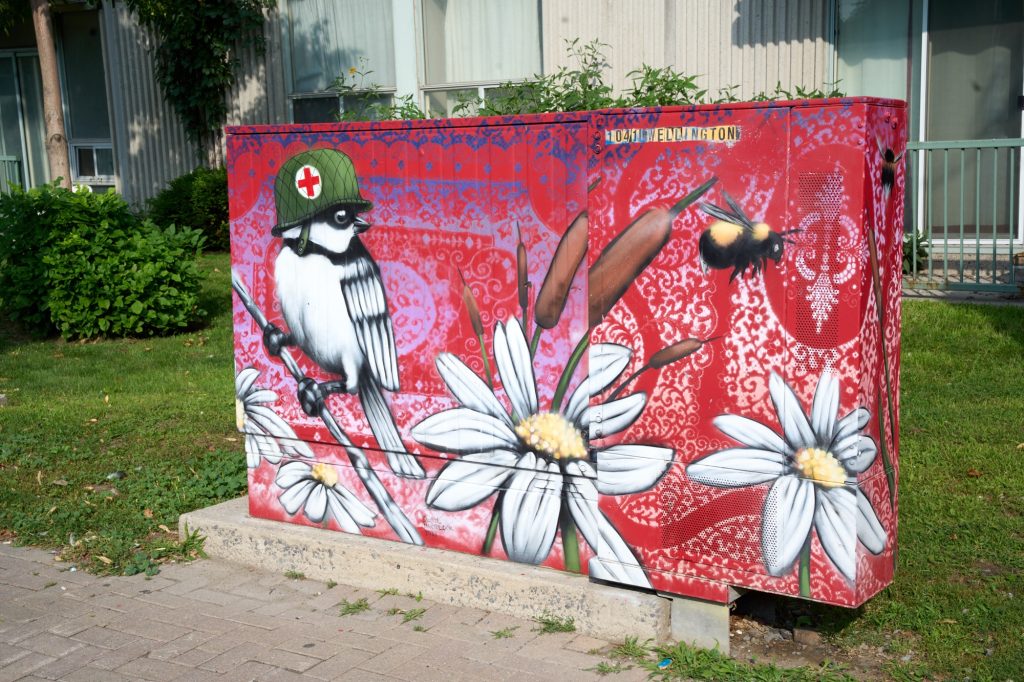
Beyond preserving history, Malovic hopes the project will help build stronger connections between artists, residents and local business improvement areas, while encouraging more investment in public art.
Several BIAs already embed the Ottawalls map on their websites, and Ottawa Tourism has also incorporated it into its online resources.
Ultimately, he hopes people begin seeing the city’s walls differently.
“Street art is probably the most democratic form of art we have,” he said. “You don’t need to buy a ticket to a museum. You don’t need to go into a gallery. It’s there for everyone, every day. And I think that makes it worth preserving.”