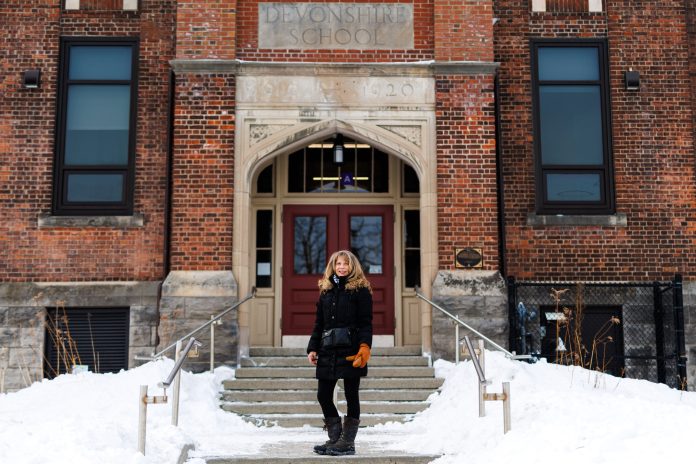

Long before Project of Heart was adopted by the Truth and Reconciliation Commission and classrooms across the country, it began in a small alternative high school in Ottawa — with a teacher determined to make history matter.
Sylvia Smith, a retired educator with the Ottawa-Carleton District School Board, spent 35 years teaching students across subjects and grade levels. But it was at Elizabeth Wyn Wood Secondary Alternate School on Rossland Ave. in City View where her work took its most transformative shape.
“Elizabeth Wyn was where I did most of my growing and most of my learning. I knew very little of the personal circumstances of most of my learners, but one thing that I learned fairly quickly was that if I didn’t make their curriculum relevant, they would be lost,” Smith told KT.
Her path to that classroom was anything but linear.
After earning her Bachelor of Education from the University of Saskatchewan in 1979, Smith began her career in Whitehorse, Yukon — an experience that would later shape her understanding of Canada’s North and Indigenous communities. A few years later, she set off overseas, travelling through Greece, India and Japan while continuing to reflect on the kind of educator she wanted to become.
In Japan, she trained in self-defence and earned a black belt — an experience that led her to develop a sexual assault prevention course. When she returned to Ottawa and resumed teaching, the school board adopted the program into its curriculum for female students, an early example of Smith’s commitment to education that extended beyond textbooks and into real-world empowerment.
Smith’s time in Whitehorse stayed with her, and she continued to advocate for deeper recognition of the generational effects of the residential school system.
Never one to sit still, Smith went on to pursue a master’s degree at the University of Regina, combining her studies with a growing national focus on reconciliation.
It was during this time that Smith and her students created and developed what would become known as Project of Heart (POH).
Described as “an inquiry-based, hands-on, collaborative, intergenerational, artistic journey of seeking truth about the history of Aboriginal people in Canada” on the site’s main web page, POH began from Smith’s realization that many schools did not teach accurate history about the country’s troubling past with Indigenous peoples.
The process of building the curriculum wasn’t without challenges.
“It was always a balancing line between dealing interpersonally with the students and their difficulties and their challenges, and trying to educate for empowerment, given our boundaries and the curriculum that has to be covered,” she said.
Smith credits the unique environment at Elizabeth Wyn Wood Secondary for the project’s success.
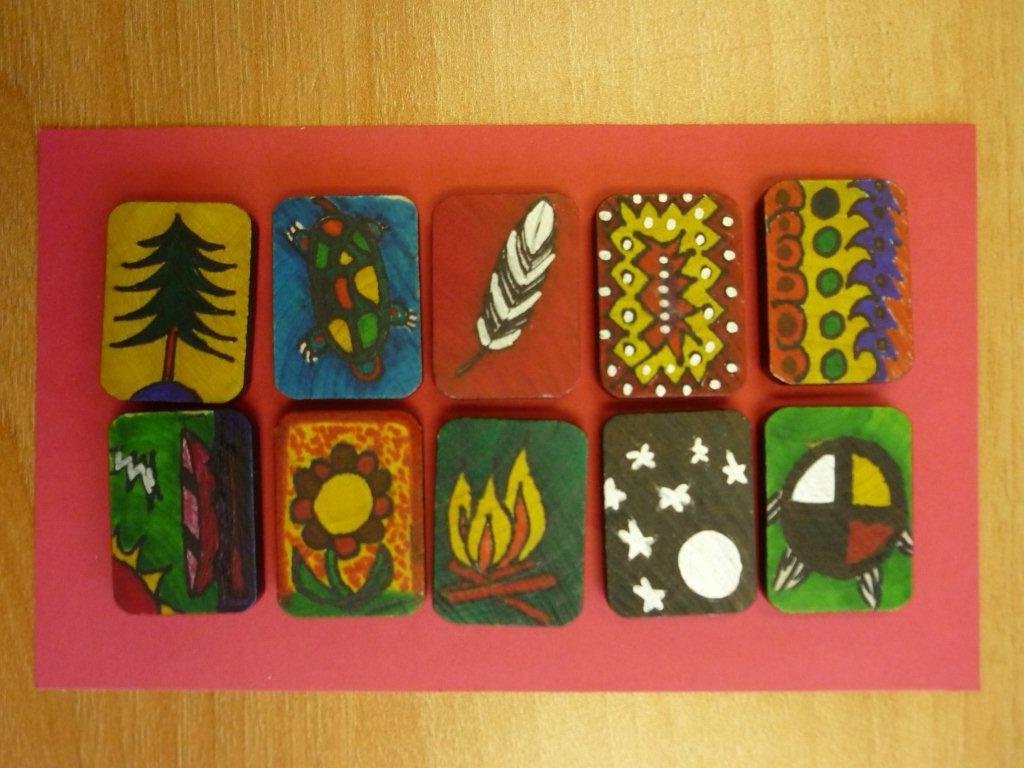
A significant portion of students who attend an alternate school program in the OCDSB come from complex backgrounds of trauma and abuse, and the board’s standardized curriculum is often not equipped to support them.
Many would label such students as “troublesome” or “problematic,” but Smith saw things differently.
“I can’t tell you how important this is if you’re ever called upon for teaching subversively or teaching for action or teaching for justice — and that’s what I was all about toward the latter part of my career. It was one thing that was really fundamentally important to me,” she said.
“We’re impacted through injustice, and [the kids] hold those experiences that they had in high school really close to their hearts. And teachers have to deal with, you know, 40 kids in a class, and you know, a lot of them got lost. They were unjustly treated, and they held on to those things in a way that wasn’t healthy.”
Smith said her work often meant supporting students who were carrying deep personal struggles while also recognizing their capacity to learn, grow and make meaningful contributions.
She believes the alternative school setting was essential to that success, as it allowed her to work closely with the same students for extended periods — six weeks at a time, for several hours each day. The structure also made it possible to integrate multiple subjects and use group-based, interdisciplinary approaches rooted in anti-colonial education, helping students connect their learning across courses and engage more deeply with the material.
POH was born from her students’ understanding of injustice, as many had their own experiences of being treated unfairly, said Smith.
“I was so lucky because until Project of Heart became known in a wider context than our board, I flew under the radar with our kids. We would go to Parliament Hill and we would be up with the Native Women’s Association of Canada holding up posters of missing and murdered Indigenous women,” she recalled.
Smith received a Governor General’s Award in 2011 for her social justice work, and Project of Heart has not been under the radar since.
A scroll through its website shows schools listed from 11 of Canada’s 13 provinces and territories, as well as links to post-secondary institutions and organizations focused on truth and reconciliation.
Project of Heart was later incorporated into the Truth and Reconciliation Commission’s educational programming. The commission adopted it as one of the learning initiatives featured at its national events, alongside exercises such as the KAIROS Blanket Exercise, helping broaden its reach as part of a larger effort to educate Canadians about the history and legacy of residential schools.
“It’s where they take the history of Canada; 500 years of history — not 150 years of history,” said Smith. “While they were doing work specifically around getting witnesses and survivor history of residential schools and getting compensation, they were also very keen to recognize that that was just one part of the whole of this 500 years.”
While Smith is still involved in maintaining the POH website and connecting with people who want to learn more, she says the ideal is for Indigenous and settler communities to build from the curriculum to make meaningful changes and connections in their own unique settings.
“In Brantford, at the residential school there, they’ve got beautiful Project of Heart murals — that’s one of the few standing schools; it’s a museum now. And there is a school up in Sault Ste. Marie where they’ve done beautiful tiled reconciliation tables where, if they’re having conflict, this is where we’re going to talk about our feelings. And they take this table very seriously,” she said.