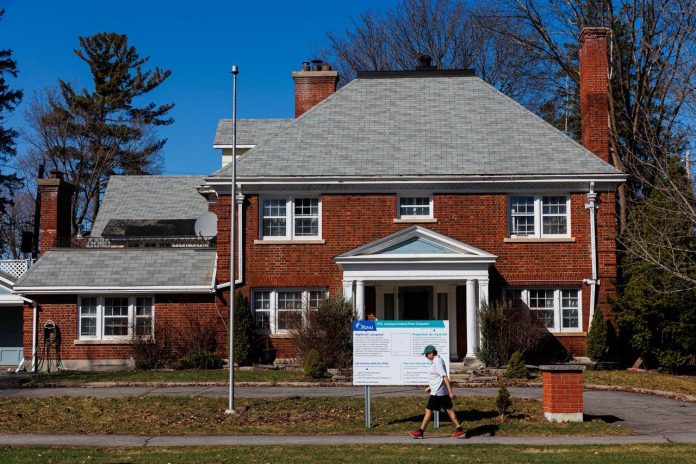

Residents and heritage advocates in Ottawa’s Island Park neighbourhood are continuing efforts to secure official heritage district designation for the area, arguing that the community’s architectural and cultural history deserves long-term protection.
Among the leading voices in that effort is local historian Jennifer Gillespie, who says preserving the neighbourhood’s past is about more than protecting old buildings.
“Once you let history disappear, it is gone forever,” Gillespie said. “There is so much history in the Island Park area that it would be a real loss to the city of Ottawa as a whole if we were to allow it to disappear and be torn down. That is why I have dedicated my efforts to make sure the history of the area is preserved.”
Island Park, located west of downtown near Island Park Drive, is known for its early-20th-century homes, tree-lined streets and longstanding community character.
Advocates say increasing redevelopment pressure in Ottawa’s older neighbourhoods has heightened concerns about demolitions and incompatible new construction.
The proposed heritage district designation would offer additional protections and oversight for future development in the area. The process, however, remains lengthy and complex.
“We are waiting for a decision to designate Island Park as a historic district,” Gillespie said. “Hopefully, if that is granted, it will allow a form of protection for the area.”
According to Gillespie, more than 180 properties are being reviewed as part of the city’s evaluation process.
“I know there’s a lot of work that needs to be done to make that decision,” she said. “There are more than 180 properties involved that need to be vetted.”
To support the application, Gillespie has spent years compiling extensive historical research on the neighbourhood and its homes. She said she has already provided the City of Ottawa her research materials documenting the area’s development and social history.
“That is why I have supplied the city with all my research about the properties in the area,” she said.
Gillespie hopes the research will eventually form the basis of a book focused on the history of Island Park, a history she believes has largely gone untold compared with some other Ottawa neighbourhoods.
“Both Rockcliffe Park and the Glebe have had books written about those areas, but there isn’t a similar book about Island Park,” she said. “It’s an untold story in the evolution of Ottawa.”
Part of that story, she says, involves the neighbourhood’s significance within Ottawa’s Jewish community during the mid-20th century.
According to Gillespie, Island Park became a welcoming area for Jewish families at a time when discrimination and social barriers existed in other parts of the city.
“The Island Park community was a haven for Jewish residents when some other areas of the city were not as accepting,” she said.
For Gillespie, preserving the neighbourhood is also about ensuring those community stories are not forgotten.
“We don’t tell ourselves the stories about ourselves like other countries do, such as the United States,” she said. “We need to celebrate ourselves a lot more than we do.”
Supporters of the designation argue that heritage conservation does not mean freezing a neighbourhood in time, but instead managing growth in a way that respects the area’s historical identity.
The City of Ottawa has not yet announced when a final decision on the proposed heritage district designation will be made.
Sears catalogue home on Island Park drive faces demolition
A rare piece of architectural history could soon vanish from Island Park Drive.
An application has been filed to demolish 575 Island Park Crescent, a stately 1927 residence now owned by the Ethiopian Embassy. It is believed to be one of the last remaining Sears Roebuck “Magnolia” kit homes in existence.
The Island Park Community Association is now campaigning to save the property and restore stronger heritage protections to the neighbourhood after the City of Ottawa removed Heritage Register protections from a number of historic homes along Island Park Drive last year.
From 1908 to 1942, Sears Roebuck sold more than 70,000 mail-order homes across the United States. Buyers could select a design from a catalogue and have pre-cut lumber, windows, doors and hardware shipped by rail for assembly. While the homes were primarily marketed in the U.S., some also made their way into Canada.
Research by local historian David Jeanes suggests 575 Island Park Crescent is a modified version of the Sears “Magnolia” model — the largest and most luxurious design Sears ever offered through its catalogue program. It is believed only 10 Magnolia homes were ever sold, with just seven thought to still exist today.
The Ottawa home differs slightly from the original Magnolia design. Its southern-style columned portico was replaced with an entrance more suited to Canadian architecture and climate.
Built in 1927 for Daniel Baillie Rochester and Lucy Helena Cole Rochester, the home belonged to one of the city’s most prominent early families. The Rochesters owned Rochester Farm — where Rochester Street now runs — and played a significant role in the development of early Bytown.
The family’s roots stretch even further back to another John Rochester, who arrived in North America from England in 1786 and is considered one of the 27 American founders.
Daniel Rochester later became a prominent figure in Canadian mining and lumber circles. He helped bring the Cobalt mining fields to prominence in the early 1900s and was involved in the early development of Noranda. His uncle, John Rochester, served as Ottawa’s seventh mayor and co-founded the Ottawa Free Press.
With files by Charlie Senack