
*This article is sponsored by Ecoline Windows*
Ottawa is home to over 300 heritage buildings and 20 conservation districts, but keeping a home’s unique look matters for more than just historic properties. In areas like Westboro and Hintonburg, many older houses still depend on their original proportions, materials, and small details to stand out.
The front door is one of those important details. Swapping out a drafty or worn entrance can boost comfort, security, and energy efficiency. However, choosing the wrong style or glass, or changing the opening too much, can make an older home look out of place.
Here’s what to keep, what you can update, and when performance should come first.
How to choose a front door for an older Ottawa home
Start with your doorway itself, not just a catalogue. Pay attention to the width, sidelights, transom, trim depth, porch size, and how the entrance lines up with nearby windows. Changing too many of these features at once can upset the balance of a narrow or symmetrical front.
Also, check the condition of the structure. If the sill is rotting, the frame is damaged, or the opening is no longer square, it might be better to replace the whole frame instead of just the door. Keeping the original size while rebuilding the frame usually looks better than squeezing a standard door into an old space.
Steel vs. Fibreglass entry doors: which fits the house?
Both steel and fibreglass doors work well in Ottawa. Steel doors are good for smooth painted finishes and simple designs. Fibreglass often looks better if you want deeper panels or a wood-grain look that matches a traditional home.
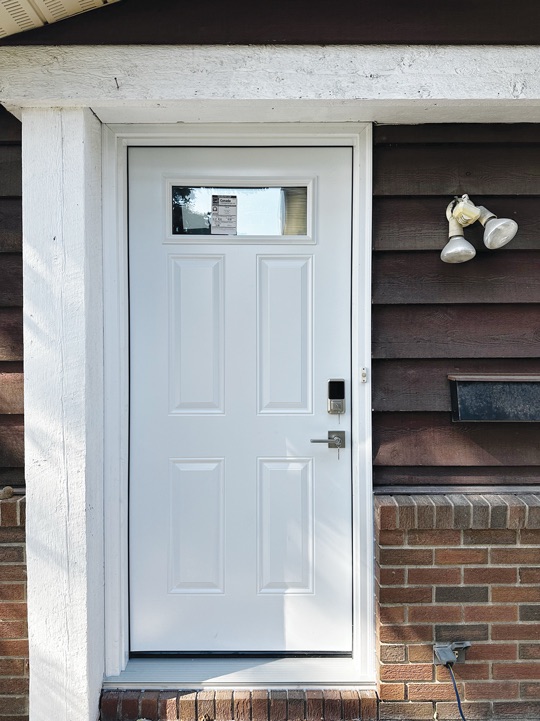
When looking for new entry doors in Ottawa, consider more than the material. Panel design, glass area, sidelights, hardware, and colour often matter more for your door’s appearance. A plain door can work for a modern home, while a simple panelled style usually suits an older brick house better.
How much glass should a front door have?
Adding glass to your door can let more light into a dark entryway, but more glass can also affect privacy and insulation. Frosted or textured glass is helpful if your door faces a busy street or is close to a neighbour.
Compare energy ratings for the complete door system. Under ENERGY STAR Canada’s current specification, qualifying residential windows and doors must have a U-factor of no more than 1.22 W/m²·K or an Energy Rating of at least 34. Air infiltration and exfiltration must also be no more than 1.5 L/s/m².
These numbers give homeowners a clearer way to compare doors than relying on an “energy-efficient” label.
Why front door installation matters in older homes
Even the best door won’t work well if the opening isn’t prepared properly. An uneven sill, gaps, missing insulation, or misaligned weatherstripping can still cause drafts and make the door hard to use.
Older homes need extra attention because doorways can shift over time. After decades of settlement, repairs and previous renovations, an older opening may no longer be perfectly square. Your door installers should verify the sill, set the frame level and plumb, insulate the perimeter and confirm even compression against the weatherstripping.
Owners of designated heritage properties or homes inside a Heritage Conservation District should check with the City before changing exterior features. Ottawa requires approval for alterations to designated properties and properties within its heritage districts. Properties listed only on the Heritage Register are not subject to the same alteration restrictions.