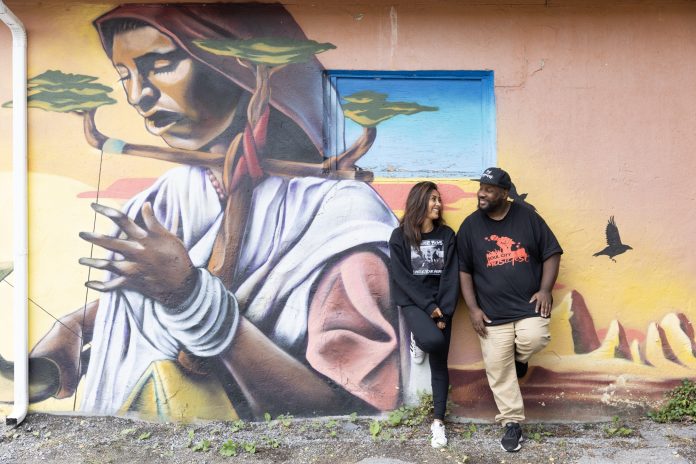

When Jacqui du Toit is asked to describe herself, she doesn’t start with theatre, directing or the long list of projects she’s helped bring to life across Ottawa’s arts scene.
“I am a storyteller,” she simply says.
It’s the answer she returns to again and again — not because it’s the easiest description, but because it’s the most accurate.
Storytelling, for du Toit, isn’t just performance. It’s memory, identity, healing and community. It’s the thread connecting her childhood in South Africa, her journey to Canada with a travelling circus, and the creative life she’s built today as co-owner of the Origin Arts & Community Centre in Hintonburg.
Du Toit grew up in South Africa during the final years of apartheid, part of a richly mixed heritage that includes indigenous Khoisan ancestry alongside Indian, Malaysian, Irish, Jewish and German roots. She remembers watching the country shift around her as barriers began to fall and schools opened to students of different racial backgrounds.
“It changed the way I saw community, cultures, people bringing people together,” she said. “I was interested in people’s stories. I wanted to know — how did you live your life?”
A teacher noticed her curiosity before she fully understood it herself. One afternoon in a classroom filled with art supplies, something clicked.
“It absolutely blew my mind,” she recalled. “It was like me stepping into a palace of gold. I was sitting in the corner sketching and painting, and my teacher just kept giving me materials and showing me different ways to work. She looked at me and said, ‘You have a gift.’”
Not long afterward, she stepped onto a stage for the first time.
Du Toit had auditioned to play Peter Pan. Instead, she was cast as Captain Hook — a role she initially resisted until she realized it came with most of the lines.
“That was the first time I really fell in love with theatre and character development,” she said.
That passion eventually led her to the University of Cape Town, where she studied theatre and performance before joining a travelling circus company that brought African and Canadian performers together on tour. Around 2011, the troupe arrived in Canada — and then abruptly folded.
Du Toit stayed anyway.
“We had a one-year visa,” she said, laughing. “And honestly, I just wanted to come for the snow.”
Instead of leaving, she built a life in Ottawa.
The transition wasn’t easy. As a performer navigating auditions in Canada, she found herself repeatedly told she didn’t fit the expectations casting directors had in mind.
“I kind of got this thing like I wasn’t Black enough. They couldn’t put me in a box. My accent was weird,” she said.
It was instead storytelling that shifted her path forward.
“I remember telling my first story to an audience and feeling something so different compared to acting a script,” she says. “Storytelling is more than just telling a story. It’s healing. It’s shifting. It’s changing the course of your life.”
It also became a way to stay connected to home while raising her child far from South Africa.
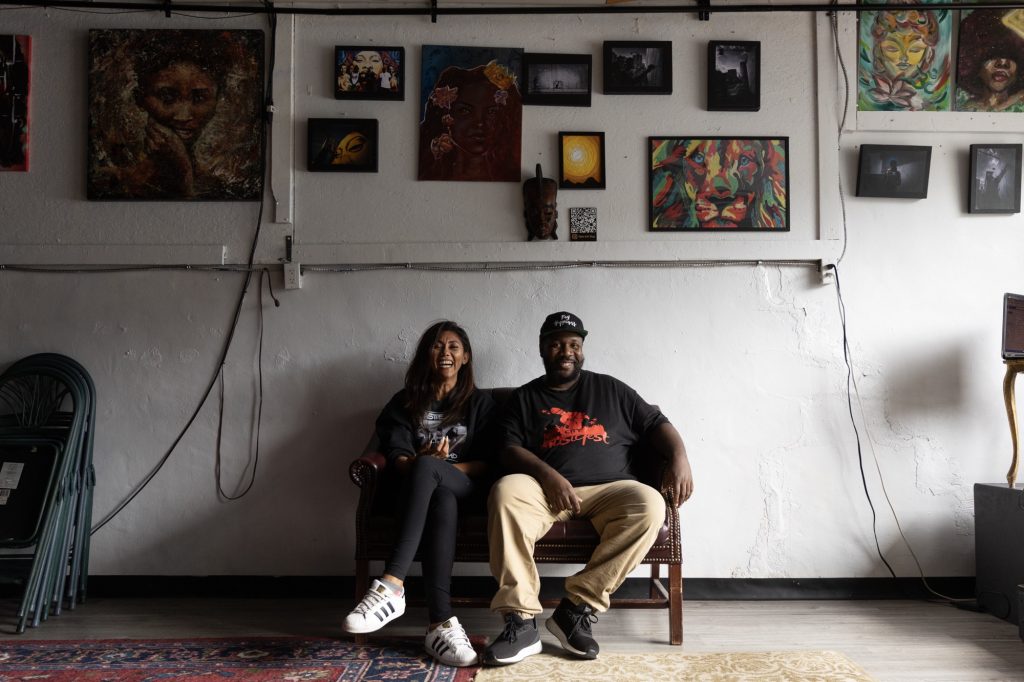
Storytelling and wellness are closely linked in Du Toit’s practice — something that traces back to her own childhood. During apartheid, she recalls her mother being prescribed yoga by a doctor as a way to cope during a difficult time. Because classes were held in a whites-only area, she had to carry written permission just to attend.
“She would come back home, and then she’d teach me the yoga,” du Toit said.
Through her company Eighth Generation Storytelling, she began sharing African oral storytelling traditions in schools, seniors’ homes and community spaces across Canada and internationally.
Earlier this year, she completed a residency teaching storytelling at the American International School in Bangladesh, and she plans to return to South Africa later this year for additional workshops and training. In Ottawa, she has also worked with the National Arts Centre, providing live audio description for theatre productions, helping make performances accessible to audiences who are blind or partially sighted.
Creating community in Hintonburg
The building that now houses the Origin Arts & Community Centre at 57 Lyndale Ave. once served as the original headquarters of Happy Goat Coffee Co., where du Toit worked as one of the first baristas. Even then, the space functioned as something more than a café.
“I remember bagging beans, and the community would come by, and we’d sing songs and have a cup of coffee,” she said.
Years later, she saw the possibility of transforming it into something Ottawa didn’t quite have. In this intimate arts space, people could rehearse, perform, experiment and gather without needing permission from larger institutions.
Together with collaborators, including poet Jamal Jackson and his brother, Captain Jackson, she helped create what is now a multidisciplinary community arts hub that continues to host performances, workshops, and youth programming. Today, Origin Arts & Community Centre is also recognized as the only Black-owned and operated performing arts venue in Ottawa — something du Toit sees as both meaningful and necessary in a city where independent cultural spaces can be difficult to sustain.
“The door has opened up to so many people from around the world,” said du Toit. “It’s just incredible to be part of that.”
The work she creates there often reflects the same themes that shaped her earliest experiences with art. Her one-woman production, The Hottentot Venus Untold, originally developed a decade ago and recently remounted at Origin, explores identity, ancestry and the legacy of Sarah Baartman through a deeply personal theatrical lens.
“It was a huge ancestral healing production that I created,” she said. “And this time around the story was received in such a different way.”
Plans are underway to tour the production to Halifax, Philadelphia and South Africa.
Since du Toit arrived in Ottawa, she’s seen the city’s arts community grow. It was the community she found here that ultimately made her stay.
“My kid is here. Her dad’s family is here. And Ottawa has been so kind to me in welcoming me, making me feel at home, making me feel safe and allowing me to express myself in whatever shape or form that comes,” she said.