
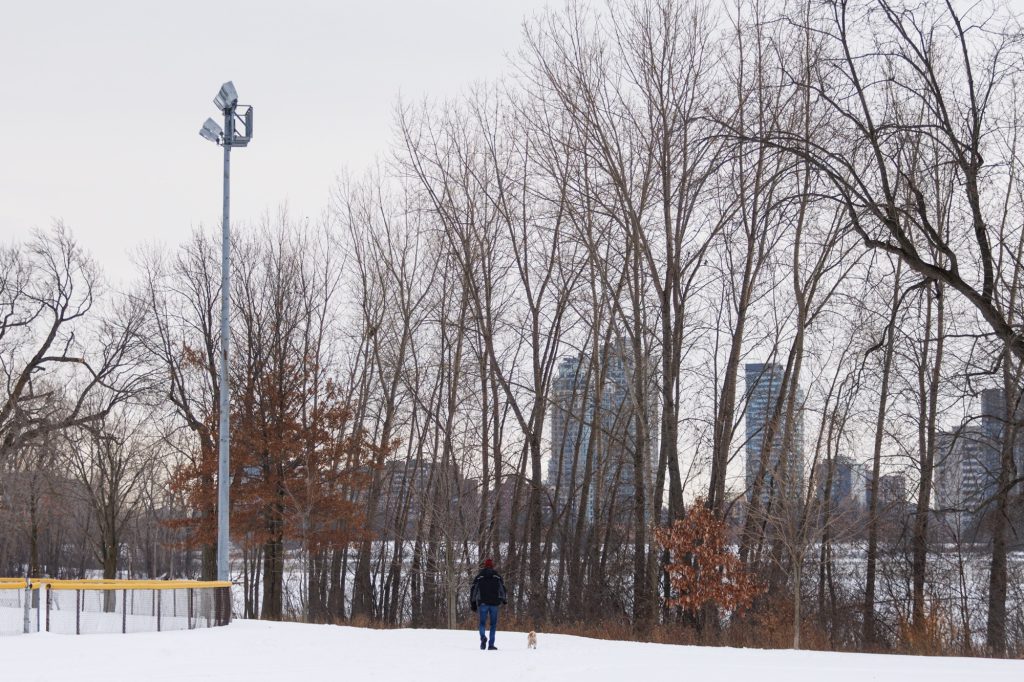
In the summer, Ottawa’s River shoreline is populated by cyclists, dog-walkers, and people looking to take in the breathtaking view of the natural corridor. But when winter arrives, its beauty is temporarily hidden beneath deep snow, making it difficult to access.
That changed when volunteers started grooming the river’s edge along the Kichi Sibi Mikan Parkway, carving a smooth, continuous winter pathway where none had existed before. The shoreline, once a seasonal barrier, became a winter destination.
Now, that idea is spreading across the water.
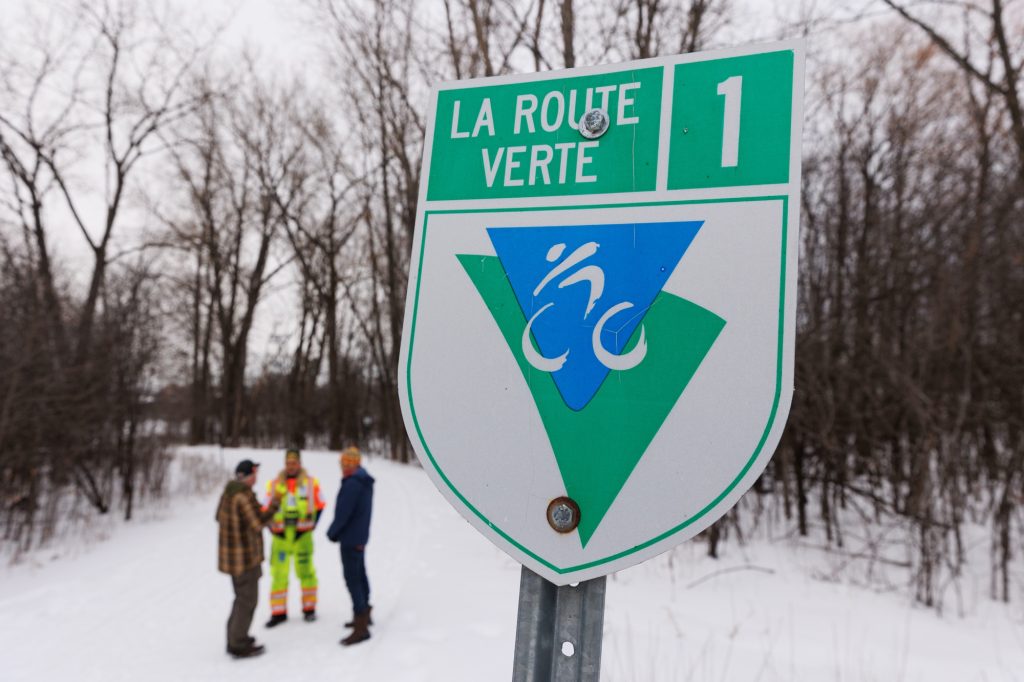
This winter marks the second season of Sentier Blanc Val-Tétreault, an urban winter trail running 3.7 kilometres along the Gatineau shoreline. The name translates loosely to “Val-Tétreault White Trail,” referencing the neighbourhood it serves.
Like its Ottawa counterpart, the trail is groomed for cross-country skiing, walking, and snowshoeing — a new piece of winter infrastructure built not by governments, but by community volunteers.
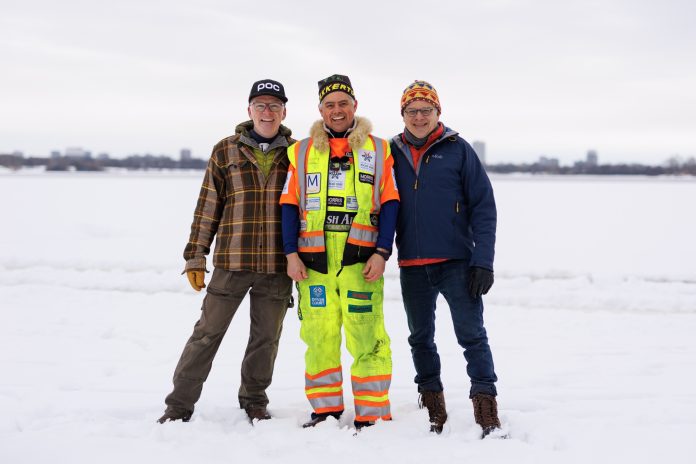
Dave Adams, manager of the Kichi Sibi Winter Trail, has watched that evolution firsthand. He describes Sentier blanc Val-Tétreault as part of a movement that began on the Ottawa shoreline and is now spreading outward.
“The Sentier Blanc is following along on the inspiration of the Kichi Sibi Winter Trail, which was the first urban winter pathway in Ottawa,” said Adams. “Since then, six other trials have been born. What’s unique about Sentier Blanc is that it’s on the Quebec side. But Ottawa and Gatineau are really one big community.”
Though the two trails sit on opposite shores, they already share a conceptual link — and possibly a future physical one. Adams points to the dormant potential of the Chief William Commanda Bridge, which closes in the winter.
In a memo sent in the late fall, the city said the bridge would close again due to safety fears. But it did note that if enough snow fell, it would “consider conducting a test grooming.”
When the Chief William Commanda Bridge opened in 2023, it was branded as a multi-season attraction. But the city later said that, due to the bridge’s steel structure and timber-plank surface, it would be unable to plow or salt the surface safely.
Adams said he believes their operations would not harm the bridge. Snow grooming does not involve salt or plowing; instead, it is “press and play.”
That long-term vision is shared by the volunteers who built the Gatineau trail. Marc La Fortune recalls that the idea of interprovincial connection was present from the beginning.
“That will be the original plan. The vision was to have the bridge as the connector to be able to use both sides and create a really urban cross-country center,” he said.
Even without that connection, the immediate goal has been simpler: bring winter activity directly into the neighbourhood.
Michel Chénier, who initiated the project through the Val-Tétreault community association, says the trail was built to make winter feel approachable rather than forbidding. He explained that the trail fills a gap between city streets and the more rugged terrain of Gatineau Park.
“Our objective at the beginning was to provide an environment, a safe environment for the citizens of Gatineau and specifically Val-Tétrault to get outside in the winter and to enjoy it,” said Chénier
“It’s an opportunity for people to socialize, to get out in a family setting. And at the same time… this is more of a very flat trail that provides a safe environment for those who are a little bit sometimes daunted by the conditions of Gatineau Park.”
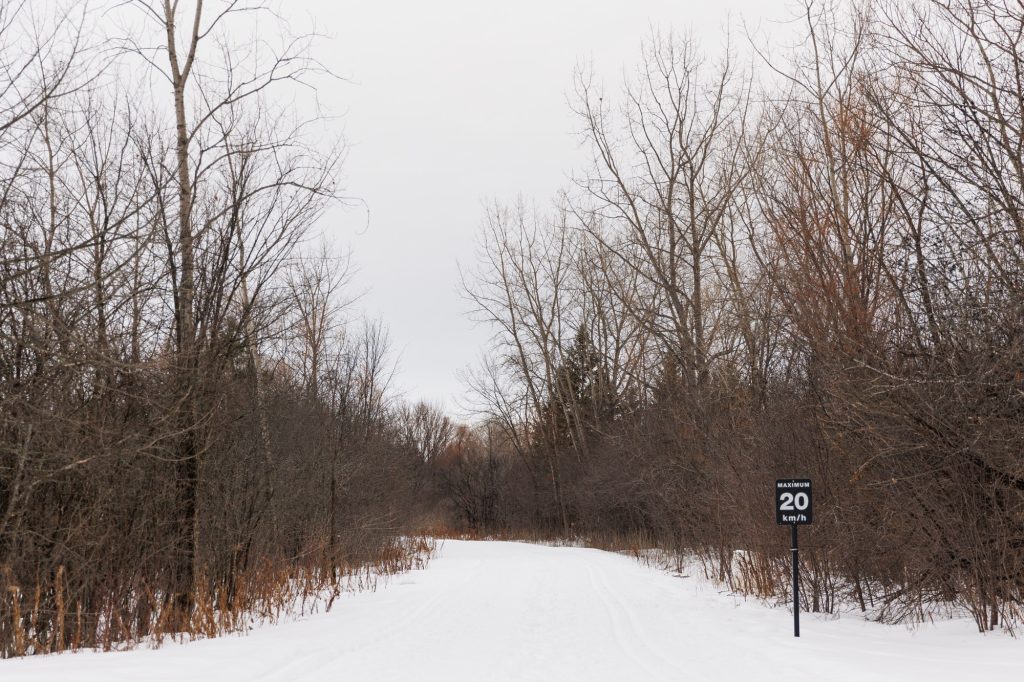
The setting itself is part of the attraction. Unlike the more exposed shoreline on the Ottawa side, much of the Gatineau trail winds through a forested corridor, naturally sheltering it from wind and helping retain snow.
“I think this side of the river is a little bit more natural. We have quite a bit of bush and tree corridors. I’m going to call them the green tunnel.”
Early users are beginning to discover the trail, though its growth has been gradual. For now, that sense of discovery is part of its charm. La Fortune sees the same pattern.
“It’s just the beginning. Yesterday, I was skiing and met some people for the first time. First question is, is it free? Who’s grooming it?” he said.
Behind the scenes, the work required to keep these trails open is far more complex than most users realize. Adams says managing funding and coordination has become the hidden backbone of the winter-trail movement.
“Urban Winter Pathways are complicated things. We get a little bit of public funding, but primarily we have to seek a revenue source other than public funds. So that means donations, that means sponsors. I spend more time chasing money than I do actually on the operations side,” he said.
In Gatineau, the operation remains small but functional, relying on ingenuity as much as equipment.
“We have a small team of volunteers… We get organized and groom the trails after it snows,” Chénier explained.
“The National Capital Commission donated Skidoos. We bought a groomer from a farmer at a sugar shack,” said La Fortune.
Support from Ottawa’s established trail network has helped the Gatineau project find its footing.
“Dave has been very helpful in terms of getting this project off the ground… he provided a lot of advice and mentoring,” said Chénier.
For Adams, that mentorship is part of the broader mission.
“The reality is, every one of these trails is community-run and initiated. So the neighbourhoods that have the wherewithal to make it happen are going to get one.”