
By Nicholas Carchidi
In little more than a year, much has changed within a few blocks of Ottawa’s Chinatown.
A supervised consumption site closed its doors. A new provincial addiction treatment hub opened in its place. A controversial safer-supply clinic moved into the neighbourhood, changed ownership and faced calls for investigation.
But despite the changes, residents and businesses say the effects of Ottawa’s opioid crisis remain highly visible on Chinatown streets.
Ryan Turley, president of the Dalhousie Community Association, lives just steps from the Somerset West Community Health Centre and around the corner from New Dawn Medical.
Turley said he continues to see open drug use, discarded paraphernalia and people overdosing on neighbourhood streets.
“Just yesterday, I had to call 911 because there was somebody, a potential overdose, around the corner from my house,” Turley told KT.
Business owners tell similar stories. Dennis La has operated New Pho Bo Ga La in Chinatown for more than two decades.
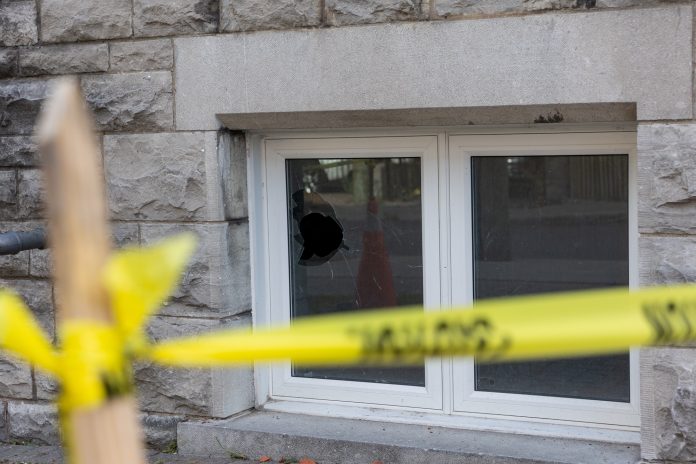
“I’ve been here 26 years, and things haven’t gotten better,” La said. “I had someone break in through our windows once and also had others smash cars parked close by that belonged to customers.”
Phong Chau of Hoang Lan Jewellery said people openly inject drugs near his store and regularly gather outside its entrance.
“A lot of them stand in front of my front door, which isn’t good for business,” Chau said.
Ottawa police data has historically shown higher crime rates in Somerset than the city as a whole. Data obtained through a freedom-of-information request found a rate of about 5,079 incidents per 100,000 residents in Somerset, compared with 4,430 citywide — about 14 per cent higher.
But much of what residents and businesses describe does not fit neatly into crime statistics. Chinatown BIA executive director Yukang Li said problems with overdoses, open drug use and discarded paraphernalia are nothing new.
“Frankly, I have seen no meaningful improvement in those conditions over the past seven or eight years,” Li said.
A changing addiction landscape
Somerset West Community Health Centre previously operated a supervised consumption and treatment site at 55 Eccles St. It closed on March 31, 2025, after the Ontario government prohibited supervised consumption sites within 200 metres of schools and child-care centres.
Somerset West transitioned the following day into one of the province’s new Homelessness and Addiction Recovery Treatment, or HART, Hubs, which offer treatment, primary care, mental-health and housing supports but do not allow supervised drug consumption or safer supply.
The closure coincided with an increase in overdose calls nearby. City data previously obtained by the Kitchissippi Times showed paramedics responded to 106 overdose calls in the immediate Somerset West area between March 1 and Sept. 30, 2025, compared with 89 during the same period a year earlier — an increase of about 19 per cent.
The number of supervised consumption sites downtown has since dwindled further. On June 12, Sandy Hill Community Health Centre and Ottawa Inner City Health closed Ottawa’s two remaining provincially funded consumption and treatment sites after Ontario suspended funding for CTS sites in communities already served by a HART Hub.
Some Chinatown residents and businesses believe those closures have put additional pressure on Somerset, although Turley said he cannot confirm whether people previously accessing the Sandy Hill site have moved into the neighbourhood.
Turley nevertheless questions removing supervised consumption while continuing to offer other addiction services.
“I would rather have a consumption and treatment site than just a HART Hub on its own because I feel like there are people that are going to use the services of the HART Hub, but they are also people who use hard drugs,” he said.
Without somewhere to consume those drugs, he said people instead go “around the corner, down the street, to a parking lot, wherever, and use there.”
New Dawn Medical has faced a different set of concerns.
The clinic began as Northwood Recovery, which opened in Hintonburg in September 2024 and prescribed hydromorphone, commonly sold as Dilaudid, as an alternative to toxic street opioids such as fentanyl.
Northwood moved to 838 Somerset St. W. in March 2025 after Hintonburg residents raised concerns about drug dealing, discarded prescription bottles and the alleged diversion of medication.
Somerset Ward Coun. Ariel Troster and Ottawa Centre MPP Catherine McKenney subsequently pushed for greater security, wraparound support and measures to prevent prescribed drugs from being diverted.
Northwood announced in June 2025 that its Ottawa clinic would close, but the facility instead changed ownership and reopened as New Dawn Medical. Turley said residents have not seen the improvement they hoped for.
“We haven’t seen a slowdown,” he said. “The issue of diversion and dealing around that clinic is as bad or worse than ever.”
The Dalhousie Community Association is not opposed to safer supply, Turley stressed, but has concerns with the current model.
“We want to put that front and centre, that we’re not against it in principle,” he said. “And we think that there are ways that it could be done properly. But we don’t support the current model that’s being used.”
Turley said the association is concerned about oversight, wraparound supports and whether prescribed medication is reaching the illicit drug market.
“I don’t think the clinic is doing enough to prevent the diversion and the drugs falling into the hands of drug dealers or being traded for harder drugs,” Turley said. “I don’t think there’s enough wraparound care being provided to the clients.”
McKenney and Troster previously called on the College of Physicians and Surgeons of Ontario to investigate New Dawn over concerns about prescribing practices and alleged diversion.
New provincial rules also came into effect this June requiring physicians prescribing narcotics as safer supply to personally conduct an initial in-person assessment and repeat that assessment at least every three months.
Some Dalhousie residents have also filed complaints with provincial regulators, Turley said.
“We’d like to see more action from whatever level of government can address that,” he said. “We’d like to see more action from the government to investigate what we’re seeing.”
Searching for a way forward
The Chinatown BIA has been pressing Ottawa police for greater visibility, and Li said there has been some improvement since May.
But he wants a more permanent police presence, including regular foot patrols and potentially a neighbourhood police office or community safety point.
“If a dependable public-safety presence cannot be established, I am concerned that the BIA may eventually have to consider hiring a private security company,” Li said.
That could mean diverting BIA money currently spent on street cleaning, public art, cultural programming and events.
Turley said police are only part of the answer. He would also like more social workers and outreach workers regularly on neighbourhood streets.
The city has expanded its 24-hour Alternate Neighbourhood Crisis Response, or ANCHOR, program, which dispatches community-based teams to mental-health and substance-use calls across a larger portion of central Ottawa.
Turley said he would like to see that kind of street-level support continue, while also calling for greater accountability from New Dawn.
“I think that if that clinic can’t be reformed and they can’t start delivering services in an accountable manner that they should be shut down,” Turley said.
Li said governments also need to improve access to addiction treatment, mental-health care, recovery programs and supportive housing.
“People struggling with addiction need effective treatment and support, while residents, employees, customers and small-business owners have an equal right to safe and accessible public spaces,” he said.
With files by Charlie Senack