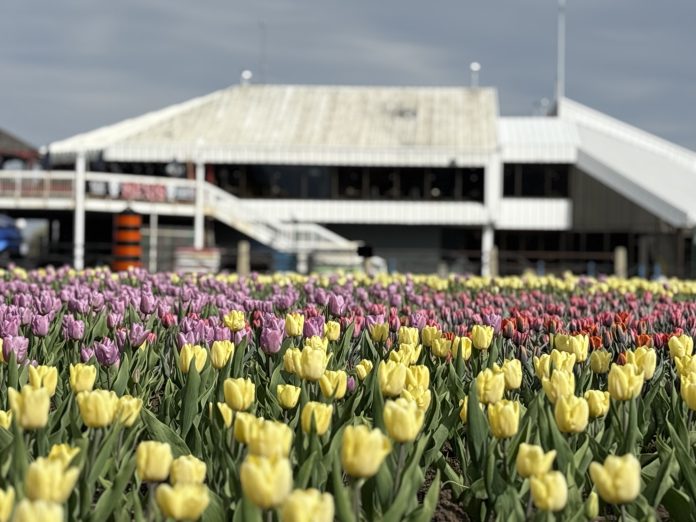

The tulips may have bloomed as brightly as ever this spring, but behind the scenes, organizers of the Canadian Tulip Festival say the event’s future is becoming increasingly uncertain.
Following the conclusion of the 74th annual festival last month, organizers are warning that deep funding cuts forced them to scale back programming and could threaten one of Ottawa’s signature events if support continues to decline.
“We know that Canada, especially Ottawa, is facing some really tough times with government cutbacks and layoffs. We know that we need to tighten our belts and stay afloat and make sure that we remain as low risk and high reward as possible to keep going,” said Jo Hall, executive director of the Canadian Tulip Festival.
“We hope that the city understands that our economic impact is huge. And on top of that, our psychological impact is massive. Kids are playing, everyone is smiling and laughing. Gardens are good for the soul.”

Hall said the festival operated with more than 50 per cent less government support this year, amounting to roughly $200,000 in lost funding.
“Pre-pandemic, we were working with what we thought was a shoestring budget. After the pandemic, we figured out what a shoestring really was, and this year we’ve taken even deeper cuts. So we’ve had to redesign the festival from the ground up.”
More than a flower festival
Every spring, millions of tulips burst into colour across Canada’s capital, brightening parks, pathways and public spaces and transforming the city into a celebration of international friendship and remembrance.
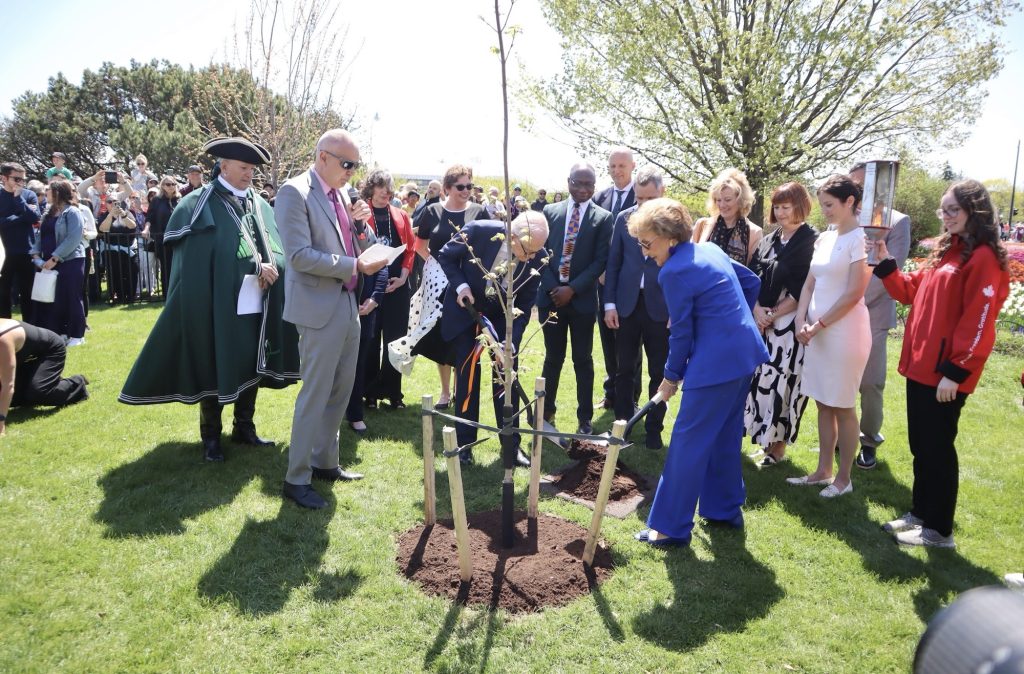
This year’s festival opened with a visit from Princess Margriet of the Netherlands and her husband, Professor Pieter van Vollenhoven, highlighting the enduring ties between Canada and the Netherlands.
The princess and her husband also participated in a tree-planting ceremony, returning a sapling from a maple tree that had been first gifted to her grandmother, Queen Wilhelmina, shortly after the Second World War.
“Tulips symbolize how the past has united our two countries. May they continue to do so,” Princess Margriet said during the opening ceremonies.

Mayor Mark Sutcliffe echoed those sentiments, saying, “The enduring friendship between Canada and the Netherlands was forged through courage and commitment and sacrifice.”
The festival traces its roots to the Second World War, when members of the Dutch royal family and the Dutch government fled Nazi occupation. Princess Juliana and her daughters arrived in Ottawa in 1940, taking up residence at Stornoway while Queen Wilhelmina and the Dutch government-in-exile remained in Britain.
During the war, Princess Juliana gave birth to Princess Margriet at Ottawa Civic Hospital. To preserve her place in the Dutch line of succession, the federal government temporarily declared the maternity ward extraterritorial under the War Measures Act.
Following the liberation of the Netherlands by Canadian troops, Princess Juliana gifted more than 100,000 tulip bulbs to Ottawa as a symbol of gratitude and friendship. Renowned photographer Malak Karsh later proposed creating a festival to celebrate the annual gift, leading to the first Canadian Tulip Festival in 1953.
Today, the National Capital Commission plants the flowers, while the festival organization provides the infrastructure and services needed to host hundreds of thousands of visitors.
“Even though the NCC plants the tulips, the Canadian Tulip Festival provides the guest infrastructure and customer service and support required to host over 360,000 people,” Hall said.
What was lost
Hall said reduced funding meant several popular attractions had to be eliminated.
“The two things that we really miss being able to do are our Boardwalk Adventures. We’ve had Black Light Boardwalk, we’ve had the Big Bug Boardwalk, and unfortunately, this year we just had the Boardwalk.”
“We also miss being able to show our free movies. People loved coming out to watch a movie in the gardens. We were able to do matinees and evening shows every day for 11 days.”
Perhaps the biggest change was the absence of the Victoria Day fireworks and drone show.
“The biggest loss this year is that there were no Victoria Day fireworks or drone show,” said Hall. “Half the budget, half the show.”

The absence was particularly noticeable following last year’s hybrid fireworks and drone show celebrating the 80th anniversary of the Liberation of the Netherlands.
“We had 35,000 people here. Canada’s first hybrid firework drone show, celebrating 80 years of liberation. It was incredibly moving. We had all those people spontaneously singing ‘O Canada’ on the road at the end of the show. That’s the sort of stuff we’re missing when we can’t get that level of government support.”
To help offset the cuts, organizers introduced several paid experiences and expanded fundraising efforts. That included $6 tickets for the tulip trail, scavenger hunt, tulip trek, and tulip taxi.
Preserving a legacy
Hall said losing the festival would mean much more than the loss of a tourism attraction.
“If we lose the festival, we lose Canada’s only celebration of the Liberation of the Netherlands. We are the only place in the country that tells this story.”
“As our Second World War veterans are now in their late 90s and early 100s, when that generation passes, who is left to tell their stories? That is what we do, and we cannot lose that.”

The festival continues to attract visitors from across the region and beyond. Pierre Lemay and Elyse Goulet travelled from outside Sherbrooke, Que., to attend the festival for the first time this year.
“I love flowers, so I went on the website and saw all the tulips and where they came from,” said Goulet. “I wanted to see it because it’s an important connection.”
“My girlfriend wants to see the tulips, so we came down,” said Lemay.
For Brian Mabee, a town crier from Gananoque who participated in the Ontario Guild of Town Criers Championship held during the festival, the annual event is also about preserving freedoms won during the Second World War.
“This tulip festival embraces our freedoms. Freedoms of Canada, freedoms of Holland and freedoms within the world. And that’s important for us to maintain,” he said. “For me, it’s very important that we continue to celebrate what we’re able to do at a festival like this.”
Hall hopes governments, businesses and residents recognize the value of preserving an event that has become both an economic driver and a symbol of remembrance.
“If we lose the festival, we lose Canada’s only celebration of the Liberation of the Netherlands.”
With files by Charlie Senack