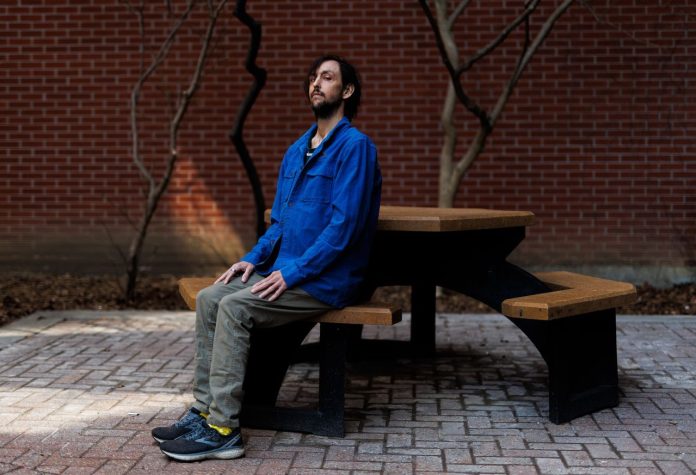

For much of his life, Michael Holst was the kind of person who showed up for others.
The Westboro-raised carpenter spent years helping older adults with snow shovelling and household repairs, supporting clients at the Good Companions Seniors’ Centre as they learned to use carpentry tools safely, and volunteering at Ottawa Bluesfest and the Army Run.
Now, the 34-year-old Central Park resident is living with autoimmune liver disease and waiting for a transplant. His family is hoping the community he once supported might help him in return.
“I worry about, of course, dying, but I also worry about not being able to look after my younger brother and my two-year-old dog,” Holst said in an interview with KT. “I want to be around for them. I feel like I’m almost letting them down in a way.”
Doctors at Toronto’s liver transplant clinic have told him his best chance at survival is finding a living donor, since the wait for a deceased donor liver can take years. Last fall, specialists warned his life expectancy could be as little as two years.
A diagnosis that reshaped his life
Holst, who graduated from Nepean High School, first learned something might be wrong after blood work following a 2009 car accident revealed unusual results. Doctors continued monitoring his condition, and two years later — at age 18 — he was diagnosed with liver disease.
For several years after his diagnosis, the condition remained relatively stable. More recently, however, his health has declined more rapidly.
Today, his liver is heavily scarred and no longer functioning properly. He is living with complications including portal hypertension, an enlarged spleen and a blood clot in his liver — all signs of advanced liver disease.
“In the last 30 days, I’ve had four procedures,” he said. “It’s been really hard just managing the trauma of that lately.”
At one point, fluid built up in his abdomen and moved into his chest cavity, affecting his ability to breathe and requiring emergency treatment, including a blood transfusion and oxygen support.
Another complication he experiences is hepatic encephalopathy, which happens when the liver cannot properly remove toxins such as ammonia from the bloodstream. The condition can be severe enough that someone may not know where they are or what day it is.
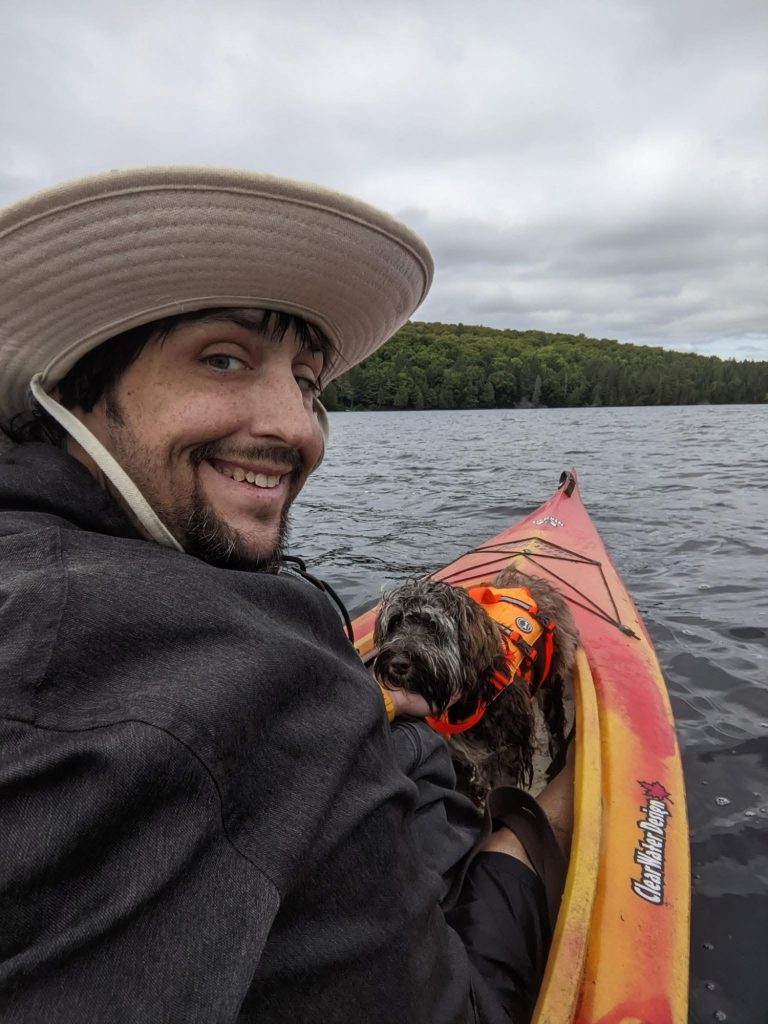
As the disease progressed, Holst began experiencing increasing fatigue, muscle loss and chronic pain. He stopped working as a carpenter in July 2025 and now depends on family members to help with groceries, cleaning, and even walking his two-year-old schnauzer-cockapoo mix, Sam, when he doesn’t have the energy.
Despite those challenges, he has worked hard to slow the progression of his illness. He stopped drinking in 2019 and made significant dietary changes, cutting back heavily on salt and fat and focusing on high-fibre foods and vegetables. Along with medical treatment, those changes appear to have helped stabilize his condition somewhat.
“When I feel good, I try to do as much as I can,” he said. “I’m attempting to go to the gym more and get out of the house more.”
Hoping someone steps forward
Holst is eligible for both a deceased donor liver and a living donor transplant, but specialists say finding a living donor is his best chance.
Across Canada, the need for organs remains significant. At the end of 2024, 609 people were waiting for a liver transplant, and 89 died that year before receiving one. Overall, roughly 250 Canadians die each year while waiting for an organ transplant.
Only about 18 per cent of organ transplants in Canada involve living donors, which is why transplant specialists often encourage patients who are eligible to search for one.
A healthy donor between the ages of 16 and 60 with blood types A-, A+, O- or O+ may be eligible to donate part of their liver through the living donor program at Toronto General Hospital, one of the leading transplant centres in the world.
More than 1,000 living liver donor transplants have been performed at Toronto General Hospital, and the donor survival rate on the operating table is 100 per cent. The liver is also one of the few organs capable of regenerating itself, typically within eight to 12 weeks for both donor and recipient.
“They need to be the epitome of health themselves, essentially,” Holst said. “It is a major surgery… but the person who is the donor would be able to completely get back to their life as they left it.”
If he receives a living donor transplant, he would also be removed from the deceased donor waitlist, opening a spot for someone else still waiting.
Until then, his life remains largely on hold.
“I don’t know how to plan for my life,” he said. “I don’t know whether I should even bother going back to work or planning for anything because I don’t know how long I have.”
Still, he continues to look ahead to the future — travelling again, gardening and starting a family.
Holst understands not everyone will be in a position to donate, but sharing his story could still make a difference.
“If they could spread the word themselves, I’d be really happy with that,” he said. “That would be super helpful. However, if they themselves were to offer me a liver donation, then I’d be over the moon. You can go through the whole process, the checkups, and everything, and you don’t need to follow through. You can back out at any time. So there’s no 100 per cent obligation.”
Potential donors can begin the process through Toronto General Hospital’s living donor program by completing a health history form and submitting proof of blood type. Financial support is available through the Trillium Gift of Life Network, which reimburses eligible expenses such as travel, accommodation, food and some lost income during the donor screening process.