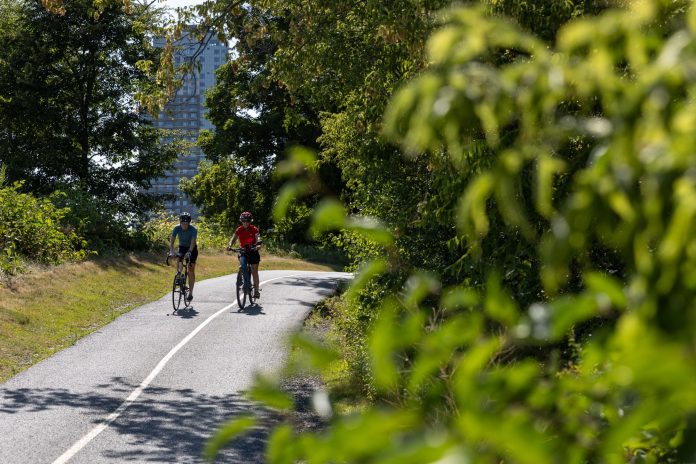

Bike season is finally around the corner. For many Ottawa residents, that means it’s time to dust off helmets, tune up bikes and get back outside after a long winter.
The prime riding season from April to October is every cyclist’s favourite time of year, but early spring does come with a small warning. Road shoulders often still carry remnants of winter sanding operations, including grit and debris left behind after the snow melts. That makes this one of the most common times of year for flat tires, so riders should stay alert while enjoying the fresh air.
Local bike shops are already seeing riders preparing for the return of warmer weather.
Over at Bushtukah Westboro, bike expert Mike Cote said this time of year, they have a plethora of passionate cyclists.
“We’re also seeing families coming in who are excited about the springtime, want to set up their kids with a bike for school, or get exercise,” Cote said. “Ottawa is an amazing city with such green and beautiful places on bike paths.”
Cote said customers come into the shop with a wide range of needs, from everyday commuting and recreational riding to more technical trail cycling. He added that conversations with staff often help people find the right fit.
“I see a lot of people biking. I think it’s a healthy choice and you’re just getting a lot of endorphins,” Cote said, “Some cyclists join the club that could give you exercise and friendships.”
At Full Cycle Bike Shop on Wellington Street West, owner Matti Pihlainen said cycling participation has shifted over the years but remains strong.
“The pandemic was a fairly large one, but it seems that ridership increased a little during the pandemic,” Pihlainen said, “A lot of people bought bikes, and a lot of those people are still out there riding a lot, and I’ve gotten into the sport.”

One trend he continues to see is growing interest in gravel bikes.
“That’s kind of like a more general-purpose road bike for the average enthusiast, all road surfaces are really comfortable to ride on,” Pihlainen said.
For people considering getting started this season, he recommends beginning with a conversation at a local shop.
“Just to come in the store, talk to someone, get some information and make good decisions.”
Cycling continues to grow across Ottawa
Cycling activity across Ottawa has increased significantly over the past decade.
About 99,000 cycling trips were made daily in 2022, up from roughly 48,000 in 2011, according to the city’s Transportation Trends Report released in 2024. Cycling now accounts for approximately four per cent of all daily trips that start or end in Ottawa.
In some central neighbourhoods — including Old Ottawa South, the Civic Hospital area and the Glebe — commuting by bike can reach more than five per cent. Overall cycling mode share has grown from 1.4 per cent in 1995 to about 3.9 per cent in 2022.
Dave Robertson from Bike Ottawa said he’s noticed growing interest in cycling across the city, something reflected in how busy Ottawa’s pathway network has become. He said many residents first took up riding during the pandemic and have continued with it since.
“Ottawa is an incredibly cycling friendly place,” said Robertson. “I see more and more parents out with their kids, teaching them how to navigate the streets. That’s a new trend I’ve been noticing.”
That growing popularity also helped inspire the launch of a cycling guide app by Bike Ottawa last summer.
“My perception of getting around the city has totally changed since I started using the app,” said Robertson. “I had my route that I would regularly take to get to work. It might not have been the most direct, but I always want it to be comfortable and enjoyable. I punched in my route on the map and realized there was a whole route I never knew existed – and it was even faster than what I had been taking.”
Ottawa’s cycling network now includes more than 800 kilometres of routes across the city, including laneways, pathways and rural connections. That includes roughly 325 kilometres of multi-use pathways and about 340 kilometres of on-road bike lanes, according to Bike Ottawa. Across the river, Gatineau Park adds another 90 kilometres of mountain-bike trails.
Ottawa’s extensive cycling network is one of the reasons the sport remains so popular locally. Every summer, more than 50 kilometres of scenic parkways — including the Kichi Zībī Mīkan — are closed to vehicles during certain periods as part of the National Capital Commission’s Weekend Bikedays program.
Kichi Zībī Mīkan is a scenic 9.4-kilometre route along the south shore of the Ottawa River. It passes popular destinations including Remic Rapids Park, Bate Island, Westboro Beach and Mud Lake, making it one of the most accessible and scenic spring rides in the city.
Since the Chief William Commanda Bridge opened as a multi-use pathway, it has also become a popular connection between Ottawa and Gatineau, averaging about 1,500 crossings a day — roughly 60 per cent of them by cyclists.
How to stay safe on Ottawa’s bike routes and protecting your ride from theft
One of the many reasons people choose to live in Ottawa’s urban core is its access to bike paths. Whether it’s along the Ottawa River Pathway to Westboro Beach, through the Central Experimental Farm, or on the Trillium Pathway that runs alongside the O-Train line, there are many ways to move around the community by bike.
But with more riders on the road comes an important reminder: knowing how to keep both yourself and your bike safe is key when commuting around town.
Wear a helmet and stay visible: A properly fitted helmet significantly reduces the risk of serious injury. Bright clothing and lights — even during the day — help drivers see you earlier.
Ride predictably: Signal turns, obey traffic lights and stop signs, and avoid weaving between parked cars where drivers may not expect cyclists.
Watch intersections closely: Most serious cycling collisions happen at intersections. Slow down, make eye contact with drivers where possible and assume you may not be seen.
Use separated routes when available: Infrastructure like the Ottawa River Pathway, Byron Linear Park corridor and other cycling links across the west end provide safer alternatives to busy streets whenever possible.
Check your bike regularly: Brakes, tires and lights should be inspected before longer rides — especially early in the season after winter storage.
Bike theft remains a concern in central neighbourhoods
Despite statistics from Ottawa Police showing bike theft across the city is trending downward, several communities in and around Kitchissippi remain among the areas most affected.
There were 1,191 bicycles reported stolen last year, down from 1,407 in 2024 and 1,321 in 2023. About 20 per cent of stolen bikes were eventually recovered, representing roughly $947,000 in stolen property in 2025, according to police.
The downtown core remained the biggest hotspot for bike theft last year, with 206 bicycles reported stolen in Centretown and another 85 in West Centretown. Hintonburg–Mechanicsville ranked eighth on the list with 40 bikes stolen, while Westboro ranked ninth with 31 and Island Park placed 10th overall.
How to reduce the risk of bike theft
Even locked bikes can be targeted, but a few steps can dramatically lower your risk.
Use a high-quality U-lock: Cable locks alone are easy to cut. A solid U-lock around the frame — and ideally one wheel — is far more secure.
Lock to something permanent: Choose racks bolted into the ground or sturdy street furniture. Avoid temporary structures or removable posts.
Remove accessories: Lights, bags and quick-release seats are easy targets if left unattended.
Register your bike: Ottawa police encourage riders to register bikes through the free 529 Garage system, which helps track and recover stolen property.
Choose visible locations: Park in busy, well-lit areas rather than isolated side streets or behind buildings.
With files by Charlie Senack