
Over the last century, Preston Street has had many identities.
In the early 1900s, many Italian families began moving to the area, drawn by affordable housing, nearby railway jobs and its closeness to downtown employment. Over time, they built a tight-knit community and opened shops, bakeries and restaurants that helped shape what is now known as Ottawa’s Little Italy.
But the neighbourhood has continued to evolve.
Today, the strip is home to more than pasta restaurants and bakeries selling cannoli. Middle Eastern, South Asian and Asian restaurants now sit alongside longtime Italian establishments. While the area still celebrates its roots through Italian Week each June and the murals and plaques that tell its story, it also embraces new influences.
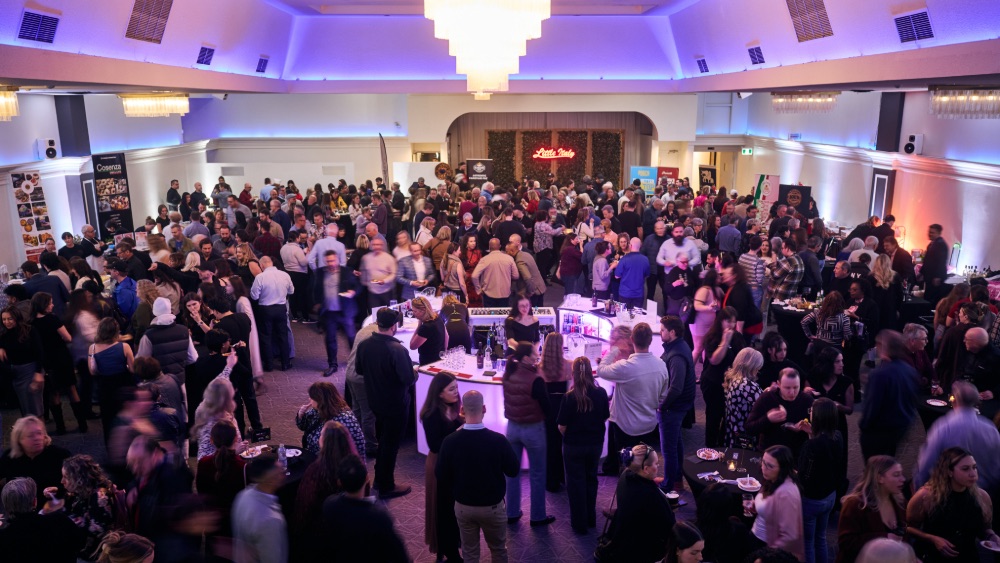
That mix was on display recently during the sold-out Taste of Little Italy event, where more than 500 guests sampled dishes from more than 15 Preston Street restaurants in a single evening celebrating the corridor’s evolving food scene.
“Taste of Little Italy is all about celebrating the business community we have here on Preston Street,” said Lindsay Childerhose, executive director of the Preston Street BIA. “It’s a chance for people to experience so many of our local restaurants in one night, to revisit longtime favourites and discover their new go-to spot. The energy in the room last night really showed how much people value that experience.”
The Kitchissippi Times caught up with three participating businesses to hear how they are adapting as Little Italy continues to change.
At Pasticceria Gelateria Italiana, located at 200 Preston St., the story stretches back nearly half a century. When pastry chef Joe Calabro opened the shop in 1979, gelato was still unfamiliar to many Ottawa residents.
“We’re a small family business, and basically we were the first ones in the city bringing gelato to Ottawa,” he said. “So we are the original ones.”
Since then, the bakery has become a staple of the neighbourhood, producing traditional Italian pastries, cakes, cookies, tortes and homemade gelato made fresh in-house using European techniques. Over the years, the business expanded beyond desserts to include breakfast and lunch service, hotel partnerships and a large wedding-cake operation that once produced between 60 and 70 cakes annually.
“All the chocolate you see here is made on the premises from scratch,” Calabro said.
Keeping customers returning over decades, he said, means balancing tradition with change.
“You’ve got to have the classics and the trends,” he said. “So there are three different things. You’ve got to always be on trend, you’ve got to have the basics, and then you can play around.”
Like many long-running small businesses, staffing remains one of the biggest challenges.
“Having the right staff — you have to train them and make sure they are on the same page as you,” he said. “Once they are comfortable, it takes a lot of training. Even a basic cappuccino takes three months.”
Calabro said the changing makeup of Little Italy has helped bring new customers through the doors.
“Most of my customers, I call it the United Nations,” he said. “It doesn’t matter where you come from.”
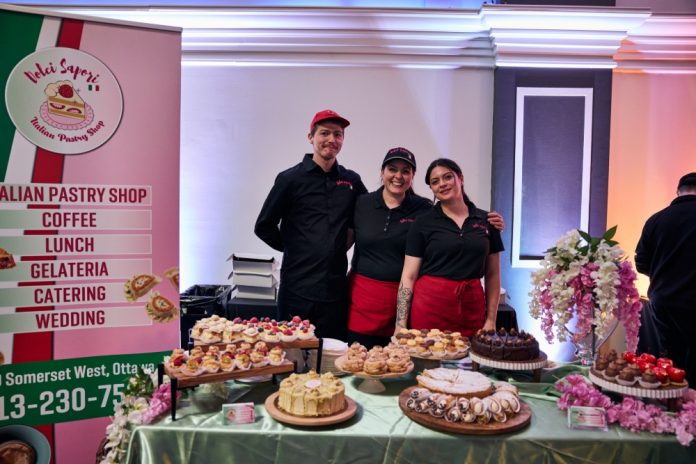
Just steps away from Preston Street at 939 Somerset St. W., Dolci Sapori reflects another chapter of Little Italy’s story — one shaped by immigration that is still happening today.
The pastry shop traces its roots back roughly 50 years to founder Roberto Bellantone’s family bakery in southern Italy. About a decade ago, he and his wife Francesca moved to Ottawa with their three young children and reopened the business here, bringing recipes from Calabria with them.
“The dream was to move to Canada,” said Francesca Bellantone. “So we moved with three little boys. Now they are teenagers — one in university and two in high school.”
Dolci Sapori specializes in traditional Calabrian pastries such as babà, peach-shaped pastries and cannoli — still its best-selling item — alongside more modern European desserts like mousse cakes and fruit-shaped pastries made with raspberry and mango.
“We started making traditional pastries from Calabria, like peach pastries, babà and cannoli,” she said. “The main best-seller is the cannoli. But Roberto also specializes in modern pastry — fruit shapes, mousse, raspberry and mango are very popular in the showcase.”
Customers often tell Bellantone the bakery reminds them of home.
“They say they can feel Italy,” she said. “Some people tell me, ‘I just came back from Italy and I feel like I’m still there.’”
She said the growing mix of restaurants along the Preston Street corridor has helped attract new visitors to the neighbourhood.
“It’s good,” she said. “It brings more people. Now they can choose.”
That shift is perhaps most visible in newer arrivals like Karahi Boys, located at 345 Preston St., which opened in December and specializes in authentic Pakistani cuisine prepared using traditional cooking techniques and imported servingware.
“We specialize in authentic Pakistani food,” said manager Asheer Khan. “Everything is brought from Pakistan — even the utensils we cook and serve in. We want people to feel like they are eating the same way they would in Pakistan.”
Among the restaurant’s signature items is its karahi, served in traditional cookware, along with its oversized family-style naan presentation that has quickly become a talking point among customers.
“We have the Karahi Boys family naan — the big hanging naan,” Khan said. “That’s the unique one.”
Desserts also reflect traditional preparation methods, including khoya kheer served in clay pots that enhance flavour and presentation.
Though still new to the street, Khan said participating in Taste of Little Italy helped introduce the restaurant to many residents who might not otherwise have tried Pakistani cuisine.
“There was a whole line that wasn’t stopping,” he said. “We had to refill the food three or four times. Everybody was talking about Karahi Boys. That made us proud.”
With files by Hau Ting Ng