
Community groups in Kitchissippi are stepping up efforts to protect historic buildings in Westboro, as new provincial rules and ongoing development pressures put added urgency on heritage designation.
At the centre of concern is a looming provincial deadline: properties listed on municipal heritage registries must be formally designated by Jan. 1, 2027, or risk being removed from protection lists. This has sparked what some advocates describe as a race against time to secure long-term safeguards for historically significant sites across Ottawa.
Linda Hoad of Heritage Ottawa said the organization is working closely with community associations and the City of Ottawa to prioritize buildings for designation.
“There is a rush to meet that deadline that can impact numerous properties,” Hoad said, noting that the city has been a “valuable ally” in advancing heritage protections.
In Kitchissippi, where intensification has accelerated in recent years, heritage advocates say the pressure is particularly acute. Many older buildings have been added to the city’s heritage registry in recent years, following calls for increased protection at city hall.
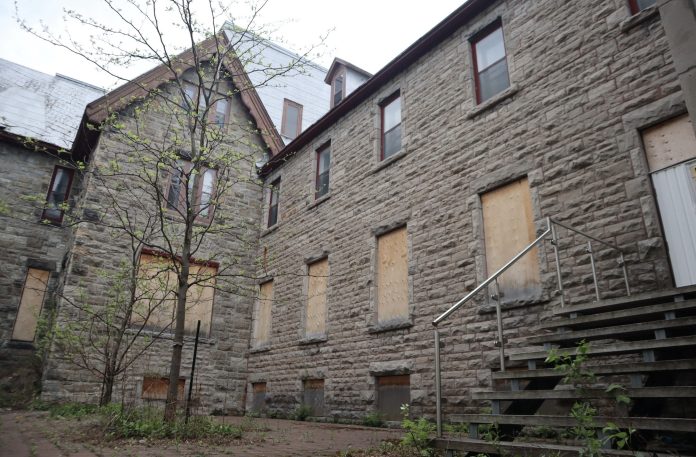
One of the most prominent local examples is The Elms, a former convent on Richmond Road built in the mid-1800s. Designated under the Ontario Heritage Act, the Gothic Revival building is widely considered an architectural landmark.
However, its future still remains uncertain.
The property, owned for years by Ashcroft Homes, has been the subject of redevelopment plans dating back to 2010. While surrounding residential buildings have since been completed, the convent itself remains vacant and in deteriorating condition, with visible structural issues prompting city-required assessments and repairs.
Hoad said the property has recently been sold, but details about the new owner and theirplans are not yet known.
“It is a bit of a mystery what is going to happen to that property,” she said.
While the building is protected, any significant changes beyond previously approved plans would require city approval, offering some level of oversight. Still, advocates worry about “demolition by neglect,” where buildings deteriorate over time without proper maintenance.
More broadly, heritage supporters argue that designation is key to maintaining the character of neighbourhoods such as Westboro and Hintonburg, where rapid redevelopment has transformed streetscapes.
Under the Ontario Heritage Act, municipalities can also designate entire Heritage Conservation Districts, areas with a cohesive historical character, to help guide development and preserve community identity.
The City of Ottawa has been expanding these efforts, with Hintonburg identified as a potential district and other areas recently approved elsewhere in the city.
For now, heritage groups say collaboration between residents, community associations and the city will be critical in the months ahead.