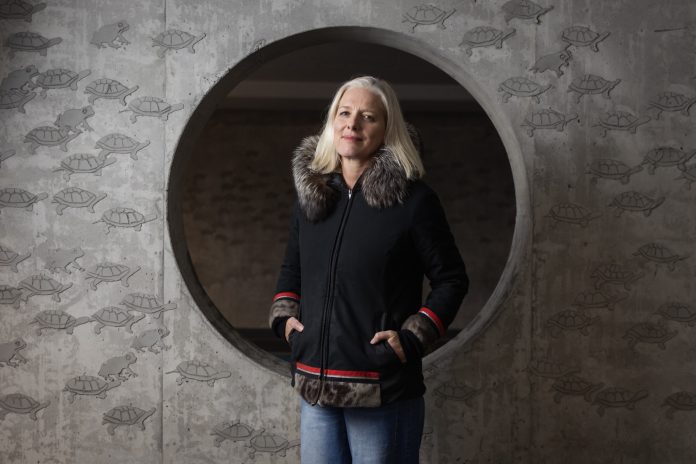

Catherine McKenna is someone who entered federal politics in 2015 for all the right reasons. She wanted to change the world, leave a greener planet for future generations, and empower young women to stand up and make a difference. Little did she know that activism would lead to Barbie dolls sent by strangers and sexist comments from opposition MPs.
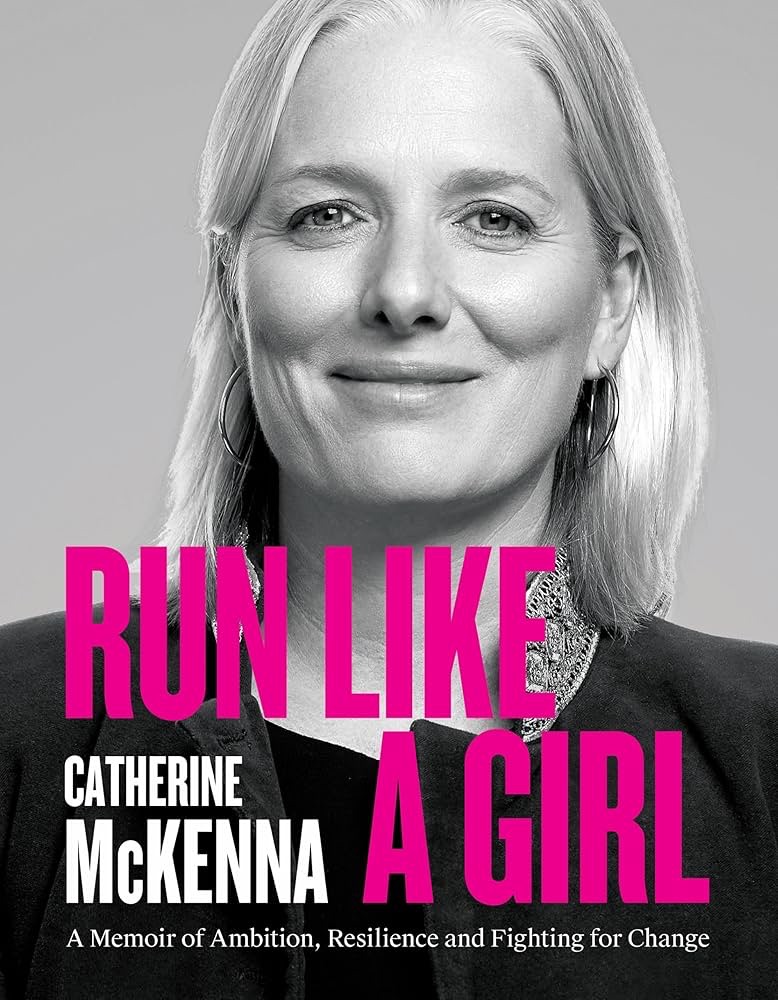
McKenna recently penned her new memoir, Run Like a Girl. It discusses the toxicity she faced on Parliament Hill and her desire to create more change outside of politics—her goal is to spark something in others.
“I decided to write a book to inspire women and young people because we really need folks to step up and tackle big issues, whether it’s climate change or human rights and democracy,” McKenna said in a recent interview with KT.
Rather than a traditional political memoir, Run Like a Girl is built like a scrapbook. McKenna’s chapters weave together objects and images — a gifted Barbie, a flyer from the House of TARG in Ottawa (a place she went to dance with friends when needing a breather), family photos and campaign posters.
Unlike most books, readers don’t have to follow a strict chronological order. They can jump in where they like, flipping between her early days and the frontlines of her climate work,
McKenna doesn’t shy away from the darker chapters of her political life. She candidly recounts the organized campaign of online abuse she endured — misogynistic attacks amplified by what she describes as “rage-farming” outlets. She was “Climate Barbie,” she says, in a coordinated effort to diminish her both as a woman and as a politician.
“They named me ‘Climate Barbie’ to make me look like I was some kind of bimbo … and then they layered on climate denial,” said McKenna.
She recalls one night in New York, returning late from a United Nations meeting, only to find her Twitter feed exploding with insults. The attack was led by Conservative MP Gerry Ritz, who called McKenna the term following a report about targets set out in the Paris climate-change accord not being met by major industrialized nations.
“It was really strange, and I did not expect it. I was trying to do a job. My team was very protective of me… they said to not call this out,” recalled McKenna.“I just looked at my team, and I said, ‘Sorry, folks, I’m just going to have to answer.’ And I did.”
McKenna responded by tweeting: “Do you use that sexist language about your daughter, mother, sister? We need more women in politics. Your sexist comments won’t stop us.”
Her response drew public support. McKenna said fathers would stop her in the street and say thanks for showing kids how to stand up to bullies.
But the threats didn’t stop there. She describes receiving harassing messages, weird parcels in the mail, and even having people yell profanities at her while walking down the street with her kids.
McKenna writes that after significant policy moments, online attacks would escalate, sometimes spilling into real life. She recounts returning home to see a derogatory word used to describe female genitalia scribbled on her campaign office. Men would stand outside her Ottawa Centre home, take selfies, and post them online as trophies. On Twitter, a meme circulated of a Barbie doll being crushed by a sledgehammer. Another one had the message, ‘Tick Tock, Barbie Bitch.’
When the incidents first began, McKenna said she was first denied security protection. Despite having a risk assessment done, she was denied the opportunity to read it.
McKenna says she thought long and hard about including all of this in her book. She insists it’s not for sympathy. Instead, it’s a call for change — not just in politics, but in how we treat public servants, especially women.
“I think there’s a bunch of things we can do … we need to protect politicians. … We need these social media companies … and we need to take this seriously,” she said, adding that she thinks politicians today have it even worse.
“In 2012, I was teaching a course at the University of Toronto, and I said the Twitter revolution would enable activists to communicate and bring people together and overthrow dictators,” said McKenna. “We’ve actually obviously found that it’s the opposite.”
McKenna said she thinks there is now a view in Question Period that when you ask a question of someone, it just becomes an opportunity to attack someone and then promote the exchange on social media.
“In particular, that is something that I find the Conservative Party does a lot of and quite effectively, in that it really turns people against particular politicians. Then it’s no surprise when they get targeted,” she said.
And while all of this provided good reason to leave federal politics behind, McKenna said that is not why she resigned in 2019. Instead, she saw more opportunity to make a difference on climate outside of the House of Commons.
“I left politics because I went into politics to make change, and I always said I’ll leave when I’m done, when I’ve come to do. And I felt like I had done what I’d come to do,” she said.
She discusses building carbon pricing under Trudeau’s government, as well as the frustration she felt when political battles hit roadblocks. She critiques what she saw as mixed signals from her own party, especially when it came to pipelines — “it felt like the oil sector didn’t meet us halfway,” she says in an excerpt.
Since leaving, McKenna has founded Climate & Nature Solutions, where she continues to push for real, measurable climate action. She also works with the U.N. Secretary-General’s Expert Group on Net Zero, advocating for transparency and ambition in global climate commitments.
In her book, she stresses that politics was always just one tool. There are many paths forward.
“It’s really tough working on climate. We all need to stick together. There’s a whole bunch of things we need to do in the climate, but we need to do it fast — and that means scaling solutions,” she said. “I love the freedom. I think I’m more entrepreneurial. It’s also nice to be able to do things that I think are more important in my own way.”