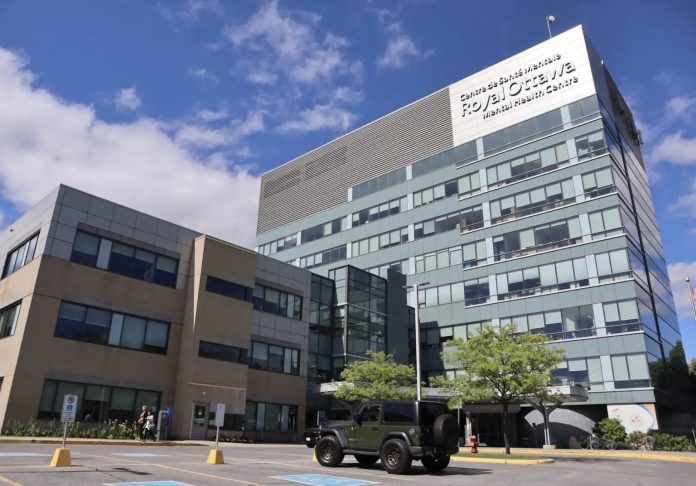

Nearly 25 years after its emergency department was shuttered by the provincial government, The Royal Ottawa Mental Health Centre is preparing to open a new urgent care clinic aimed at providing faster, more specialized support for people in crisis.
Set to open in April 2026, the clinic will offer same-day or next-day access to psychiatric assessments, crisis counselling, and guidance through mental health and addiction services. It represents a significant shift in access to care — currently, patients can wait months or even years for a psychiatric evaluation.
Unlike The Royal’s existing services, which require scheduled appointments and referrals, the new clinic will allow individuals aged 16 and older to seek urgent psychiatric care without one.
The plan, unanimously approved by The Royal’s board of directors, has received strong backing from area hospitals, police, and paramedic services, all of whom have long called for more immediate mental health support.
The urgent care clinic will be located at the front of The Royal’s Carling Avenue building. It will initially operate on weekdays during regular business hours, with plans to expand into the evenings as demand grows. The clinic will be staffed by psychiatrists, nurse practitioners, social workers, and other mental health professionals.
“We’re just really bringing the Royal into a place where it should have been all along. About 85 per cent of mental health care is provided at the primary care level,” said Cara Vaccarino, president and CEO of The Royal.
“But when family doctors or nurse practitioners in the community need specialized psychiatric consultation, oftentimes they’re left holding the bag with nowhere to go. So they put their patients on long wait lists – which is very, very terrible for outcomes,” she added. “The longer people who are experiencing mental illness or addiction don’t get help, the longer they take to get well, have to wait to get well, [and] the harder it is to get them well and keep them well.”
The Royal Ottawa previously had an emergency department that was shut down in 2000 when the Mike Harris-led government did wide-spread restructuring of hospitals. Since then, emergency mental health visits have been dealt with at the Civic or Queensway Carleton Hospitals, but that’s been adding to the long wait times in emergency rooms.
Vaccarino, who stepped into her role in early 2024, said she was shocked to learn there was no direct patient care at Ottawa’s mental hospital. While she does not want to put the blame on people who thought they were making the right decisions, she said the time has never been so urgent to get people access to care.
“I don’t think it was a good idea to close the emergency department because I think the gaps in the system only grew bigger and bigger because our local hospitals have gotten more and more busy. There’s unprecedented demand for mental health and addiction care. It was a confluence of perfect storms that has led us to a pretty dismal place in terms of our responsibility to people with mental illness and addiction,” said Vaccarino.
But Vaccarino doesn’t want to stop there. She understands the Royal is located on Carling Avenue, which can be quite far from the Byward Market, Rideau Street, and Vanier, where many of the social service issues are located. The CEO, who is trained as a social worker, said she would like to see the system work together so it brings care to the streets where people are in need.
Data from Statistics Canada shows that every year, about one in five Canadians experiences a mental health or substance use disorder. In a lifetime, about half of the population will deal with mental illness.
The situation has been getting worse in recent years with the COVID-19 pandemic and social media being identified as primary factors. Generalized anxiety disorder among Canadians over the age of 15 doubled from 2.6 per cent in 2012 to 5.2 per cent in 2022.
While many statistics are not easily available for Ottawa, between 2010 and 2015 there was a 46 per cent increase in emergency department visits at CHEO.
“The data is clear that the ravages of the pandemic really targeted young people in unique and unprecedented ways. Kids that were in university or high school had two or three years wiped out of normal development, and kids ended up too reliant on their iPhones and social media,” said Vaccarino.
“We also saw an increase in problematic drug and alcohol use during the pandemic. The aftermath is being felt in different ways. Mental health is the leading cause of disability in Canada, and it’s gotten worse since the pandemic,” she added.
Other initiatives across Ottawa are also trying to change how mental health services are being provided. The Montfort Hospital created a Mental Health Emergency Zone that feels a lot less like an ER department and more like a safe space. As a result, it has seen double the amount of mental health-related cases than other hospitals.
The Ottawa Police, which has also been seeing an increase in mental health-related calls, now has specially trained officers respond to crisis situations.
Vaccarino said mental health is what the Royal does best and said their team is made up of healthcare providers who have dedicated their life’s work in helping people with mental vulnerabilities. She said that while Canadians have become “tolerant” of the crazy wait times to see specialists like psychiatrists, she wants to create a world where access to professionals is immediate.
“I think that is a reasonable expectation. Why can’t we challenge the status quo? Those are the sort of bold visions and curiosities our senior leadership team has at the Royal,” she said.